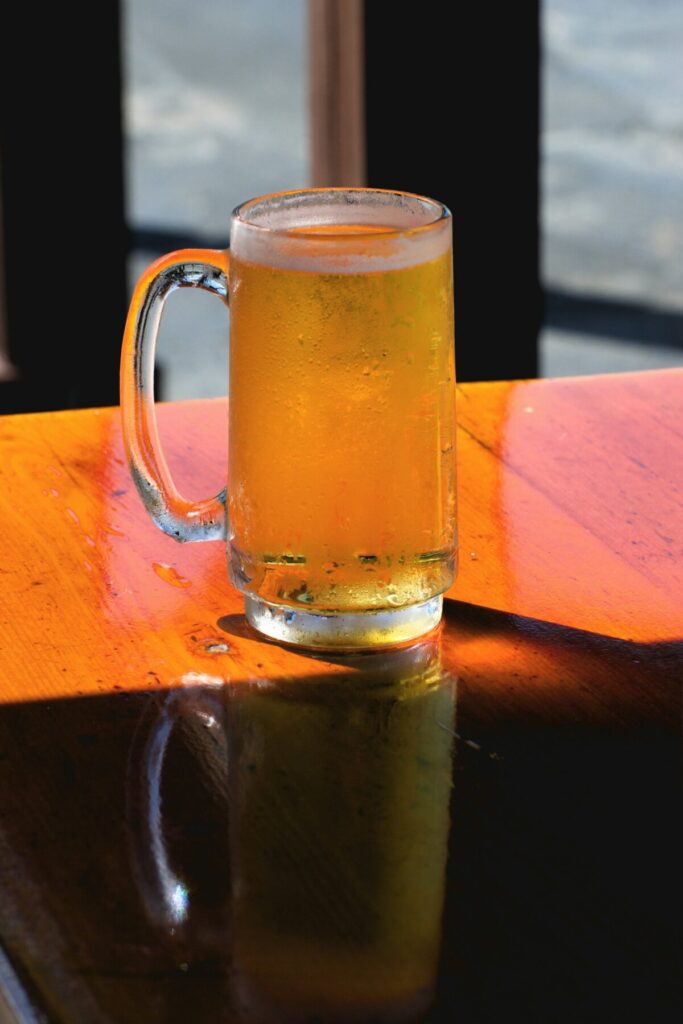
An evening in an izakaya is, for a lot of visitors, the moment Japan stops being a place they are looking at and becomes a place they are in. It is loud, informal, cheap enough to relax about, and organised around sharing.
It also runs on a set of conventions that nobody writes on the menu: a small dish you did not order appearing on the table and being charged for, a two-hour limit you were not told about, and a drinks list where most of the interesting things are written in katakana.
This is how drinking in Japan actually works, written by native Japanese speakers, so your first izakaya evening feels easy rather than baffling.
The places you can drink
Izakaya
The default. A Japanese pub that takes food seriously: small sharing plates, a long drinks list, and an atmosphere somewhere between a British pub and a tapas bar. Chains are reliable, cheap and have picture menus. Independents are better and harder to read. Both are good places to start.
Tachinomi
Standing bars. Very cheap, very quick, often excellent, and usually the friendliest rooms in the city. Ideal for one drink and two dishes before moving on.
Yakitori and yakiniku places
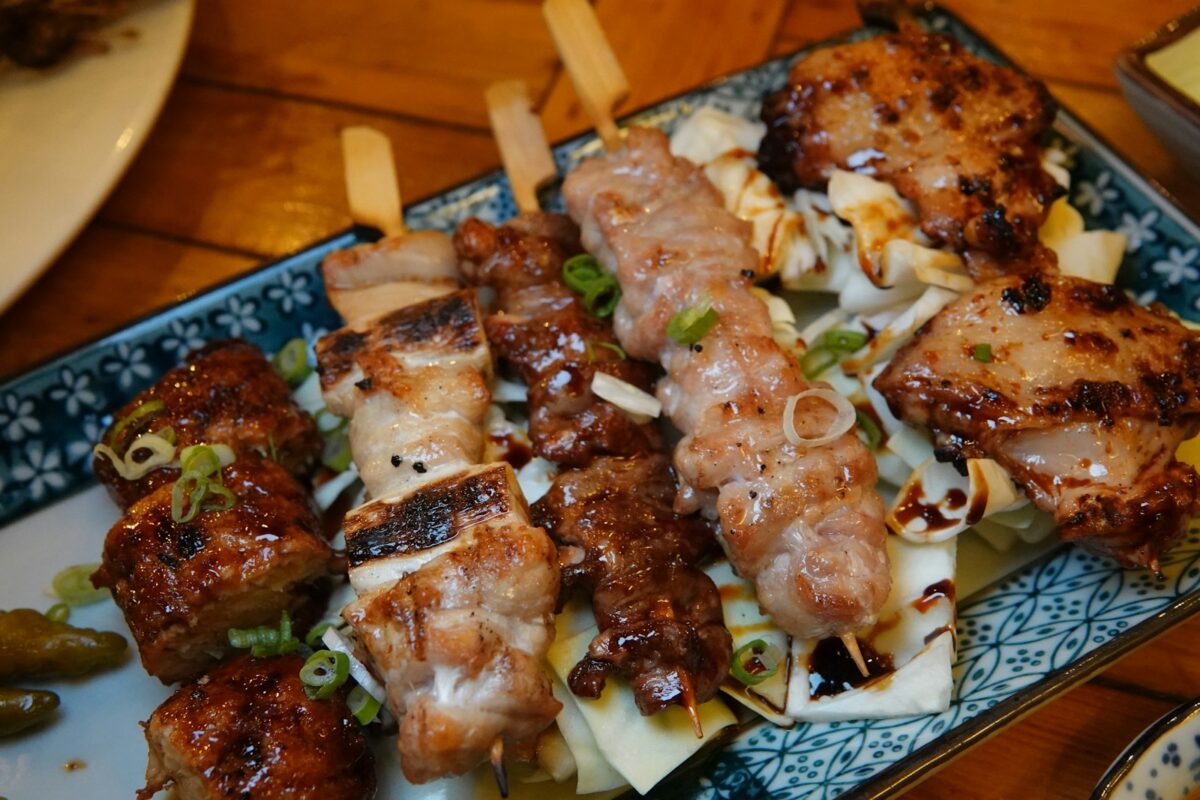
Built around grilled skewers or grilled meat respectively, with drinking assumed. Yakitori under railway arches is a genuine Tokyo experience.
Bars and snack bars
Small cocktail and whisky bars, often on an upper floor of a narrow building, and often superb. A “snack bar” is a different thing: a small hostess-style bar with a set charge, usually with regulars, and not somewhere to wander into without knowing what it is.
Convenience stores and public spaces
Drinking in public is legal in Japan, and a canned drink from a convenience store in a park or by a river is a completely ordinary thing to do, especially during cherry blossom season. Being visibly drunk and loud in public is far less acceptable than the drinking itself. Our convenience store guide covers what else they sell.
What happens when you sit down
- You will be asked how many people. Hold up fingers if you need to; it works.
- A hot or cold towel arrives. Use it for your hands, not your face.
- Drinks are ordered first, before food. This is expected and speeds everything up. Order one round, then look at the menu properly.
- A small dish appears that you did not order. This is the otoshi, a seating charge in the form of a snack, usually a few hundred yen per person. It is not a mistake and not a scam; it is how many izakaya handle a cover charge. You cannot usually decline it.
- Everyone raises their glass and says kanpai before anyone drinks. Wait for it. Starting alone is the one genuine faux pas of the evening.
What to order
Beer
The default first drink. Draught is nama biiru, and asking for a medium glass will get you the standard size. Ordering beer first for the table is normal and nobody will think it unadventurous.
Highball
Whisky and soda, served long and cold, and enormously popular. Light, cheap and very easy to drink with fried food.
Chuhai and sour
Shochu with soda and fruit flavouring. Lemon is the classic; there will be five or ten others. Refreshing, usually inexpensive, and stronger than it tastes.
Sake
Served hot or cold depending on the sake and the season, by the glass, small flask or bottle. If the menu is opaque, ask what the shop recommends, or ask for something dry or something sweet. Good sake is usually served cold; hot sake is not automatically inferior, but it is a different style.
Shochu
A distilled spirit made from barley, sweet potato or rice. Drunk with hot water, with cold water, or on ice. Sweet potato shochu has a strong character that people either love or avoid.
Umeshu
Plum liqueur, sweet, often served with soda or on ice. A good option for anyone who does not want beer or spirits.
If you are not drinking
Non-alcoholic beer is widely available and taken seriously, as are soft drinks and oolong tea. Nobody will press you, and ordering oolong tea in an izakaya is completely unremarkable.
Nomihoudai: how all-you-can-drink actually works
Nomihoudai is a fixed-price, time-limited all-you-can-drink deal, usually ninety minutes or two hours, and often sold as part of a set course with food.
What to know before you agree to it:
- The clock starts when the deal starts, and last orders are typically ten to fifteen minutes before the end. Staff will come and tell you.
- The drinks list is restricted. Premium sake and good whisky are usually excluded.
- It is often the whole table or nobody. Many places require everyone in the group to take it.
- It is not always good value. If you plan on two drinks, order individually. If you plan on four or more, it usually wins.
- Ordering one at a time is expected. Ordering six drinks at once to beat the clock is poor form and some places will refuse.
The same idea applies to food as tabehoudai, all-you-can-eat, and the two are often sold together.
Table manners that matter
- Pour for other people, not for yourself. Watch for empty glasses around you and top them up; someone will do the same for you. When someone pours for you, lift your glass slightly.
- Wait for kanpai on the first round.
- Food is shared. Dishes arrive when they are ready, in no particular order, and go in the middle. Take a little at a time onto your own small plate.
- Use the serving chopsticks if provided. If not, turning your chopsticks round to take from a shared dish is a common courtesy.
- Do not stick chopsticks upright in rice, and do not pass food chopstick to chopstick. Both have funeral associations.
- Keep the volume within the room. Izakaya are noisy inside and the street outside is not.
More on this in our Japanese dining etiquette guide, and on ordering generally in How to Order Food in Japan.
Paying
In most izakaya you pay at the till on the way out rather than at the table, and the bill is usually presented as a single total for the group. Splitting exactly is less common than dividing evenly, which is what warikan means.
Tipping is not customary and will cause confusion. Cards are widely accepted in cities but not universally, particularly in small independent places, so carry some cash. Our payments guide covers this.
Practical things worth knowing
- The legal drinking age is twenty, and identification may be requested.
- Drink-driving penalties are severe, including for passengers in some circumstances. Do not risk it.
- Watch the last train. Trains stop earlier than in London, taxis late at night are expensive, and the last train home is the single most important number in a Japanese night out. See our guide to getting around.
- Smoking rules vary. Many places are now non-smoking, some have designated areas, and smaller bars may still allow it.
- Some bars have a cover charge in addition to drinks. If the menu does not say, it is entirely reasonable to ask before sitting down.
- A few establishments do not accept walk-in foreign visitors. It is uncommon and usually about language rather than hostility. If it happens, move on without making it an incident.
Six phrases that make the evening easier
- Sumimasen — excuse me, and how you get attention. The most useful word in Japan.
- Nama hitotsu kudasai — one draught beer, please. Change the number as needed.
- Osusume wa nan desu ka — what do you recommend? This one dish will improve your meal more than any guidebook.
- Kore o kudasai — this one, please, while pointing. Always works.
- Okaikei onegaishimasu — the bill, please.
- Kanpai — cheers.
Our essential Japanese phrases guide has more, and Will English Get You By in Japan? is honest about where English runs out. Small independent izakaya are exactly where it does.
Frequently asked questions
What is the small dish I did not order?
The otoshi, a seating charge served as a snack, typically a few hundred yen per person. It is standard practice and not usually optional.
Is nomihoudai good value?
It depends on how much you drink. Above roughly three or four drinks in the time limit it usually pays; below that, order individually.
Can I go to an izakaya alone?
Yes, especially at the counter, and standing bars are even easier. Solo eating and drinking is completely normal in Japan.
Do izakaya have vegetarian options?
Some, but fewer than you would hope, because fish stock is used widely. Ask specifically rather than assuming a vegetable dish is meat-free. Our vegetarian and vegan guide explains what to say.
How much does an izakaya evening cost?
Casual places commonly work out at a few thousand yen per person for several dishes and a few drinks, and prices vary a lot by city and by venue.
Do I need to book?
For a group, especially at weekends, yes. For one or two people, walking in is usually fine, though popular places fill early in the evening.
How an izakaya evening usually unfolds
Knowing the shape of the evening makes the whole thing easier to relax into.
- Early evening. Most izakaya open around five or six, and the first hour is the easiest time to walk in without a booking.
- Drinks, then a first round of food. Order three or four dishes to start rather than a full meal, because more will arrive as you go.
- Dishes arrive in no particular order. Cold things first, fried things when they are ready. Nothing is late; that is simply how it works.
- A second round of ordering somewhere in the middle, usually once the table has worked out what it likes.
- Rice, noodles or something filling near the end, which is the usual signal that the meal is closing.
- Moving on. A second, smaller place for one more drink is completely normal, and often the best part of the night.
Two to two and a half hours is a typical stay. Some busy places set a time limit at weekends and will tell you when you sit down.
Drinking cultures vary by region
What people drink, and where, changes noticeably around the country.
- Fukuoka has open-air stalls that appear in the evening, seating perhaps eight people around a counter. Among the friendliest places in Japan to try a few words of Japanese.
- Osaka leans towards standing bars and skewered fried food, cheap and fast.
- Kyoto has a quieter, more refined bar culture, along with small places that are regulars-only, so read the room before walking in.
- Kyushu is shochu country, particularly sweet potato shochu, and it is taken as seriously there as sake is elsewhere.
- Niigata, Nagano and the north are sake regions, and a local brewery’s product will usually be on the menu.
- Okinawa drinks awamori, distilled locally and quite unlike anything on the mainland.
Asking what the local speciality is, and then drinking that, is a reliable way to have a better evening. Our guide to regional food in Japan covers what to eat alongside it.
Get more out of the counter
The best izakaya evenings happen when you can ask what something is, say what you like, and get a recommendation back. That is a small amount of Japanese and it changes the whole experience.
Travel Japanese is a short block of sessions with a native Japanese teacher, built around the situations you will actually be in, including ordering and small talk at a counter.
Book a Travel Japanese session
About Iroha Passport
Iroha Passport helps English speakers learn Japanese and plan their trips to Japan. Lessons are taught by native Japanese teachers living in London, in person or online.
By Iroha Passport