This article contains affiliate links. We may earn a small commission at no extra cost to you.
For many first-time visitors, Japan’s railways look intimidating: dense colour-coded maps, unfamiliar characters, and a dozen train companies sharing the same city. The good news is that getting around Japan is far easier than it first appears. Once you understand a few basics — especially the IC card — you can travel confidently from the airport to your hotel and across the country.
This guide covers the practical essentials of how to use trains in Japan, IC cards, the Shinkansen, and city transport, written for UK travellers planning their first trip.
Start Here: The IC Card Is Your Best Friend
The single most useful thing you can do for getting around Japan is to get an IC card. These rechargeable smart cards — Suica, Pasmo, and ICOCA are the best known — let you tap in and out of trains, subways, and most city buses without buying a paper ticket each time. You simply touch the card to the reader at the ticket gate, and the correct fare is deducted automatically.
IC cards work across most of the country, so a card bought in Tokyo can usually be used in Osaka, Kyoto, and many other regions. They’re also handy for small purchases: you can tap to pay at convenience stores, vending machines, lockers, and many shops. For more on paying in Japan, see our guide to how payments work in Japan.
You can add an IC card to your smartphone as well. Many travellers set up a mobile IC card in their phone’s wallet, which lets them top up digitally and tap the phone itself at the gate. Availability of physical cards for visitors has changed from time to time, so if you can’t find one type, staff can usually point you to an alternative — the mobile version is a reliable backup.
Riding Trains and Subways
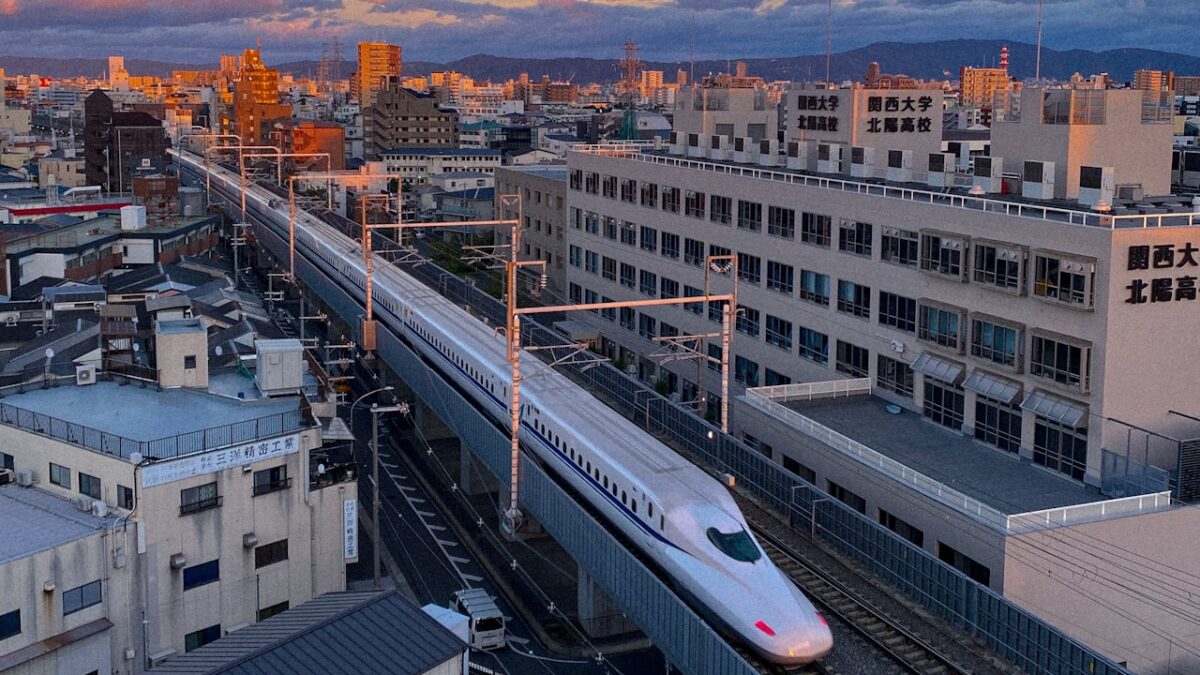
Japanese cities are served by a mix of Japan Railways (JR) lines and private railways and subways. In practice, you rarely need to worry about which company runs a line — your IC card and a maps app handle the details. The routine is simple: find your line and platform, tap in at the gate, board, and tap out at your destination.
A few things help enormously. Station names and key signs are almost always written in English as well as Japanese, and platforms are numbered. Lines and stations often have letter-and-number codes (for example, a station might be shown as “G-09”), which makes them easy to match with a map even if you can’t read the name. If you’d like to feel more comfortable with the characters you’ll see, our guide to reading Japanese signs and stations breaks them down.
If you prefer a paper ticket, ticket machines have an English-language option. Buy a ticket for the fare shown to your destination on the map above the machines; if you’re unsure, buy the cheapest ticket and settle any difference at a “fare adjustment” machine before you exit. With an IC card, you never have to worry about this — the gate calculates the fare for you.
The Shinkansen (Bullet Train)
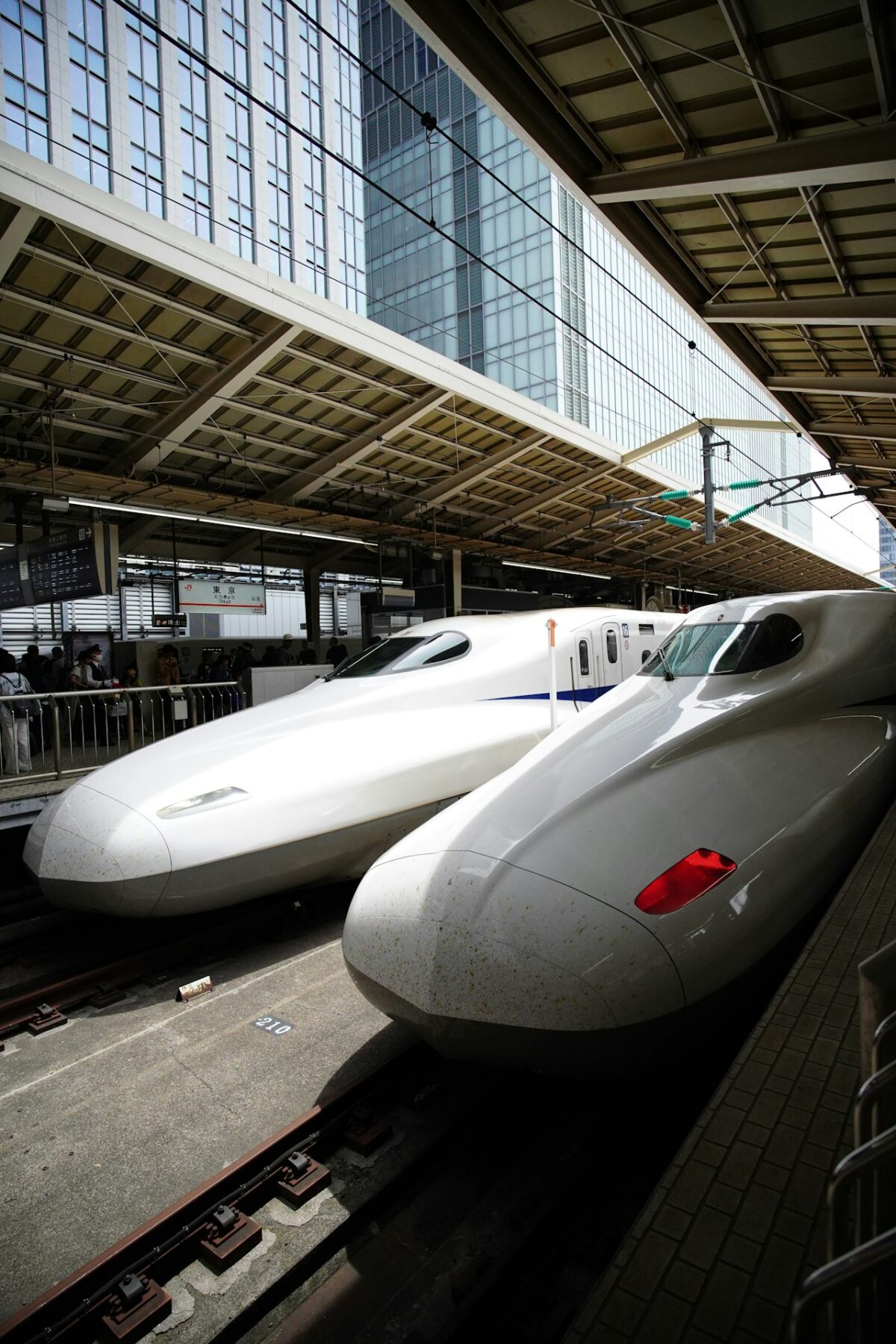
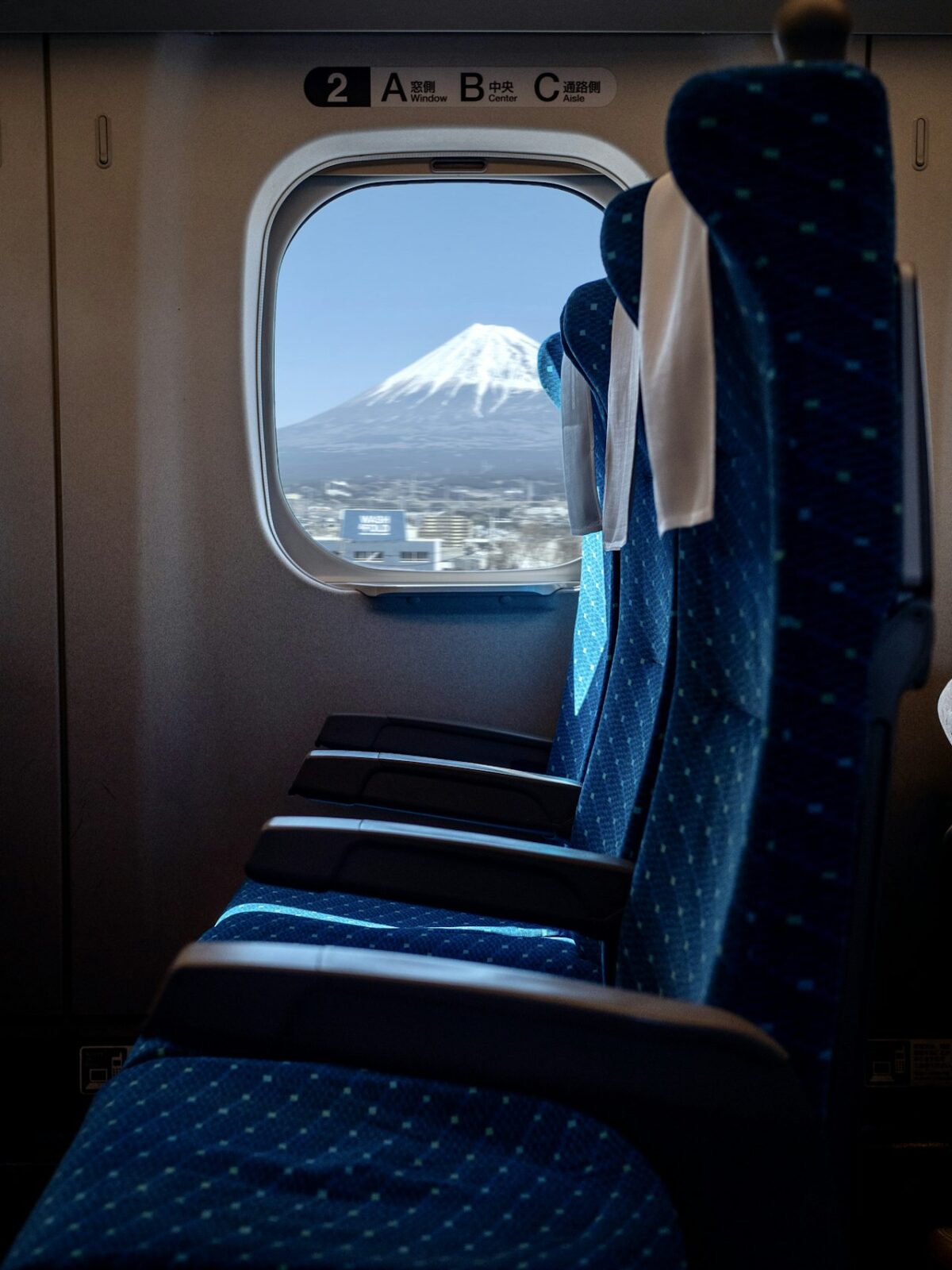
The Shinkansen is Japan’s high-speed rail network, and it’s one of the most comfortable ways to travel long distances — for example between Tokyo, Kyoto, and Osaka. Trains are punctual, spacious, and remarkably smooth.
Most Shinkansen have both non-reserved and reserved seats. Non-reserved carriages let you board any departure and sit in an open seat; reserved seats guarantee you a specific place, which is worth it during busy travel seasons. You can buy tickets at station ticket offices, from machines, or online. At the gate, insert your ticket (or tap, depending on the ticket type) and keep it until you exit. Note that a standard local IC card generally covers ordinary trains and city transport rather than Shinkansen fares, so you’ll usually buy a separate ticket for high-speed travel.
Rail Passes: Are They Worth It?
You may have heard of the Japan Rail Pass and various regional passes. These offer unlimited travel on eligible services for a set number of days and can be good value if you plan to cover long distances in a short time. Whether a pass saves you money depends entirely on your itinerary — the number of long trips, the regions you visit, and how prices compare at the time of your trip.
Because pass prices and conditions change, it’s best to check the official pass websites when you book rather than relying on older figures. If you’d rather not work out the maths yourself, this is exactly the kind of planning our team can help with (more on that below).
Buses, Trams, and Taxis
Beyond trains, cities and towns are served by buses, and some have trams. Payment methods vary: on many buses you tap your IC card, while others use a flat fare or a “take a numbered ticket when you board and pay when you leave” system. Watch what other passengers do, and don’t hesitate to show the driver your destination.
Taxis are clean, safe, and widely available, though more expensive than trains. Doors are often automatic — stand back and let the driver open the rear door for you. Having your destination written down or shown on a map helps if there’s a language barrier. Ride-hailing apps operate in some areas, usually connecting you to licensed taxis.
Apps That Make It Easy
A good maps or transit app removes almost all the guesswork. General maps apps give reliable door-to-door directions with train times, platforms, and fares, while dedicated Japan transit apps are excellent for comparing routes and connections. Enter your destination, and the app tells you which line to take, which platform to use, and when the next train leaves.
One practical tip for long days of hopping between trains and subways: a small power bank such as the Baseus portable charger (affiliate link) keeps your phone alive for maps, timetables and mobile Suica when you need them most.
Train Etiquette
Japanese trains are famously calm, and a few simple manners help you fit right in. Keep your voice down and set your phone to silent; talking on the phone on board is generally avoided. Let passengers off before you board, and line up on the platform where marked. Priority seats are reserved for elderly passengers, people with disabilities, pregnant travellers, and those with small children. During rush hour, remove a large backpack and hold it in front of you to make space.
A Few Words for Getting Around
- 駅 (eki) — station
- 切符 (kippu) — ticket
- 入口 (iriguchi) / 出口 (deguchi) — entrance / exit
- これはどこですか? (Kore wa doko desu ka?) — Where is this?
- 〜に行きたいです (… ni ikitai desu) — I’d like to go to …
Even a few words go a long way at a ticket counter. If you’d like to prepare simple travel Japanese before you go, our Travel Japanese sessions focus on exactly these situations.
Buying and Topping Up Your IC Card
Getting an IC card is straightforward. Look for the ticket machines in any major station — many have an English-language option — or ask at a staffed ticket window. You load the card with cash, and you can top it up again at the same machines whenever your balance runs low; a small on-screen prompt shows your remaining balance each time you tap through a gate, so you’ll know when it’s time. If you’re using a mobile IC card on your phone, you can usually top up digitally in a few taps, which is handy late at night or when machines are busy.
A couple of practical points help here. Keep a little more balance than you think you’ll need, since a card that runs short at the exit gate means a quick stop at a fare-adjustment machine. And if you’re travelling as a group, give everyone their own card rather than sharing — you can’t pass one card back through a gate for a second person.
Common Transport Mistakes to Avoid
A few small habits will save you time and the occasional red face. Always tap out as well as in — forgetting the second tap can leave your card unable to enter the next station until it’s sorted at a gate. Stand and walk on the correct side of escalators (this differs between regions, so follow the crowd). Watch for women-only carriages during weekday rush hours, usually marked in pink on the platform and the carriage. Avoid eating or drinking on local commuter trains, though it’s fine on long-distance and Shinkansen services. And never dash for a closing door — trains are frequent, and staff would much rather you wait for the next one safely.
Planning Longer Journeys
For trips between cities, it pays to think a little ahead. Reserved Shinkansen seats are worth booking for busy travel dates or if you’re carrying large luggage, and some services now ask you to reserve space for oversized suitcases in advance. Build in a comfortable buffer for transfers at big hubs, which can be surprisingly large, and check the last-train times if you’re out in the evening — missing the final connection can mean an expensive taxi. A good transit app will flag all of this as you plan.
Conclusion
Getting around Japan comes down to a short checklist: get an IC card, install a good transit app, and learn the simple rhythm of tapping in and out. Add a little train etiquette and a few words of Japanese, and you’ll move around the country with confidence from day one.
Want a trip that flows smoothly from station to station? Our Travel Planning service is built by a native Japanese team who can map out your routes, passes, and connections around your itinerary — so you can enjoy the journey instead of decoding timetables.
About Iroha Passport
Iroha Passport is a London-based Japanese language and travel service with over six years of experience helping UK learners and travellers. Our team of native Japanese speakers creates practical, honest guides and offers Travel Planning and Travel Japanese support for your trip. By Iroha Passport.
As an Amazon Associate, I earn from qualifying purchases.