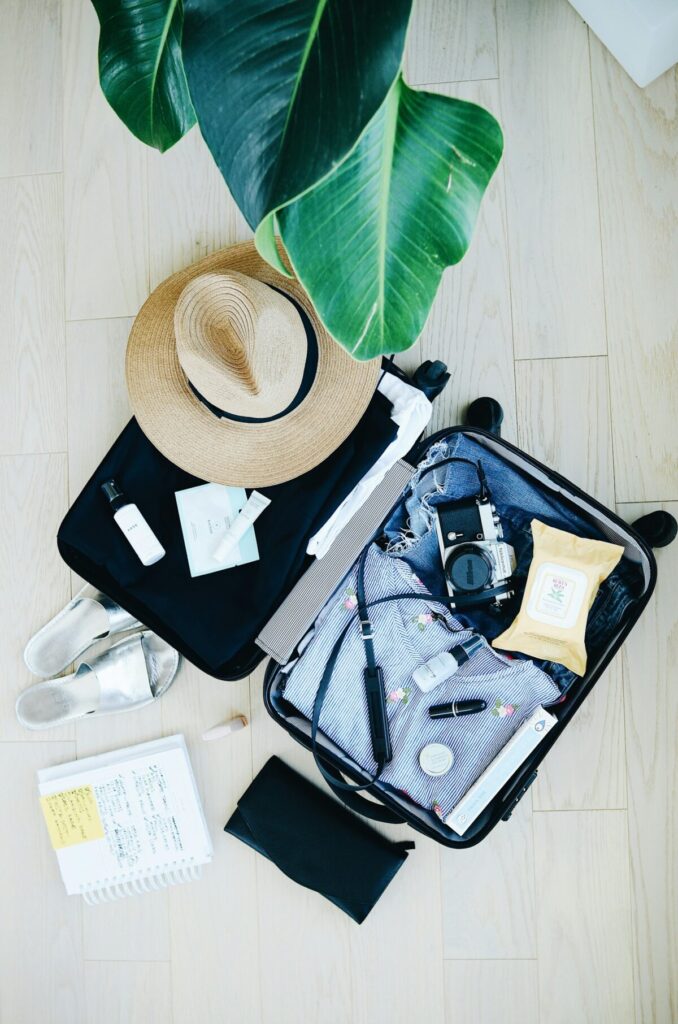
Packing lists for Japan are usually written for American travellers, which means half of the advice does not apply to you. Your plugs are different, your winter is milder, your flight is longer, and the things you can easily buy at home are not the same things.
This is a packing guide written for people travelling to Japan from the UK, by a team of native Japanese speakers based here. It covers the handful of genuinely Japan-specific items, then a season-by-season list, then the things you should deliberately leave at home and buy when you arrive.
The five things UK travellers most often get wrong
1. Plugs and voltage
Japan uses Type A sockets (two flat pins) and runs at 100V. The UK uses Type G at 230V. Two consequences:
- You need an adapter. Nothing you own will fit a Japanese socket.
- Check the voltage range on anything with a heating element. Phone, laptop and camera chargers are almost always marked 100-240V and are fine. Hair dryers, straighteners and electric shavers often are not, and a UK-only appliance on 100V will either run weakly or fail.
A multi-port adapter is worth more than a basic one, because Japanese hotel rooms are frequently short of accessible sockets. One that combines the Japanese plug adapter with a couple of USB ports replaces the adapter and the multi-plug in one.
2. Shoes you can take off easily
You will remove your shoes more often than you expect: traditional restaurants, temples, some museums, ryokan, and any private home. Laced boots become tiresome very quickly. Slip-ons, or shoes you can loosen once and step out of, make a genuine difference over a two-week trip. Bring socks without holes, and pack more pairs than usual.
3. Not enough of the medicines you actually rely on
Japanese pharmacies are excellent, and we have written about them in our guide to Japanese drugstores. However, some medicines that are ordinary in the UK are restricted or unavailable in Japan, including certain cold and allergy remedies containing pseudoephedrine, and painkillers containing codeine. Rules change and there are limits on quantities, so check the current guidance from the Japanese authorities and the UK Foreign Office before you fly, and carry prescription medicines in their original packaging with a copy of the prescription.
4. Assuming clothes and shoes will be easy to buy
Clothes shopping in Japan is a genuine pleasure, but sizing runs smaller than UK sizing, and larger shoe sizes in particular can be hard to find outside specialist shops in big cities. If you are at the upper end of UK sizing, pack what you need rather than planning to buy.
5. Overpacking for a country with excellent laundry
Coin laundries are everywhere, most business hotels have washing machines, and many have a dryer. Packing seven days of clothes and washing once is far more comfortable than dragging fourteen days of clothes through train stations.
Season by season
Japan has more pronounced seasons than Britain, and the country is long, so Hokkaido and Kyushu can need genuinely different clothing in the same week. Our season-by-season guide to visiting Japan goes into when to go, and Japanese Festivals by Month covers what will be happening while you are there; this is what to put in the case once you have decided.
Spring (March to May)
Mild but changeable, and cooler than the cherry blossom photographs suggest. Layers, a light waterproof jacket, and one warm layer for evenings. A compact umbrella earns its space.
Spring is also pollen season in much of Japan, mainly from cedar and cypress, and it is usually reported as running from roughly February into April. If you get hay fever at home, it is worth assuming you may notice it here too. Bring the antihistamine you normally take (see the note on medicines above, and check the current import rules before you travel), and be aware that masks, eye drops and tissues are sold in every convenience store and pharmacy. Daily pollen forecasts are published on the main Japanese weather sites during the season. If you have a medical condition or take prescription medication, check with your own doctor or the official guidance rather than relying on a packing list.
Summer (June to August)
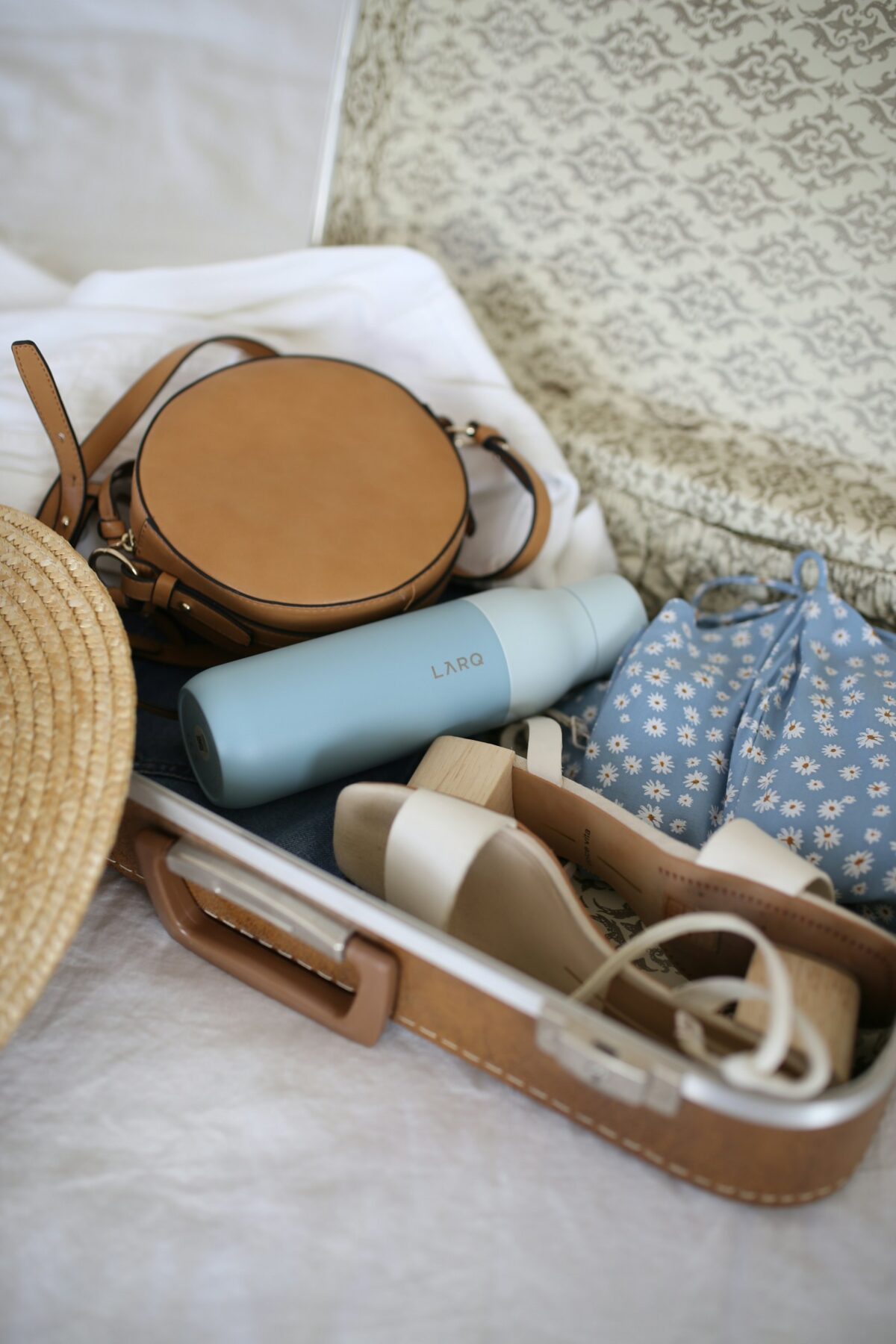
Hot and genuinely humid, in a way that British summers are not. June brings the rainy season to most of the country. Pack light natural fabrics, a hand towel (Japanese public toilets often have no dryer or paper towels, and everyone carries one), a refillable water bottle, sun protection and a decent compact umbrella that works for both rain and sun. A sturdy compact windproof one bought before you travel is worth the space, rather than buying a flimsy one at a convenience store on day one. If your trip lands in the rainy season, How to Enjoy a Rainy Day in Japan is worth reading before you go.
Take the heat seriously. Japanese summers in recent years have been hot enough that heat warnings are issued regularly through July and August, and the humidity makes it feel worse than the number suggests. A small battery-powered handheld fan, a cooling neck band or cooling body wipes, and salt or electrolyte sweets are all sold cheaply in convenience stores and drugstores once you arrive, and most people find them more useful than they expect. Plan indoor time in the middle of the day, keep drinking before you feel thirsty, and check the local heat warnings, which are published daily in summer. If you are travelling with children or older relatives, or anything about the heat concerns you, check the current official guidance before you go rather than relying on this list.
Autumn (September to November)
Many travellers say this is the best time to come. Warm early, crisp later, with typhoon season tailing off in September. Layers again, plus something warm for late-November evenings, especially inland.
Winter (December to February)
Tokyo, Kyoto and Osaka are cold but rarely severe, comparable to a chilly British winter with more sunshine. Northern Japan and the Japan Sea coast are a different proposition, with serious snow. Thermal base layers work better than a single heavy coat, because indoor heating is efficient and you will be taking layers off constantly. Waterproof footwear if you are going anywhere snowy.
The core checklist
Documents and money
- Passport with adequate validity, plus a photo of it stored separately
- Travel insurance details
- Any pre-booked rail pass vouchers or QR codes
- At least one contactless card and one backup card from a different provider
- Some cash. Japan is far more card-friendly than it used to be, but small restaurants, shrines, lockers and rural buses can still be cash-only. Our guide to payments in Japan covers this properly.
Electronics
- Travel adapter (see above)
- Power bank for long sightseeing days, carried in hand luggage
- Charging cables, plus a short spare
- Headphones. Trains are quiet and people do not take calls on them.
- eSIM or pocket wi-fi arranged before you fly. See SIM cards, eSIMs and pocket wi-fi in Japan.
Day bag essentials
- Small hand towel
- A folded tote or plastic bag for rubbish. Public bins are genuinely scarce, and you will be carrying your own litter until you find one. Our guide to Japan rubbish and recycling rules explains why.
- Umbrella
- Refillable bottle
- Comfortable shoes you have already worn in. Twenty thousand steps a day is normal in Tokyo.
Nice to have
- A phrasebook or a few written phrases. Our essential Japanese phrases for travellers covers the ones you will actually use.
- Compression packing cubes, which matter more than usual because Japanese hotel rooms are small and floor space is limited.
- A collapsible extra bag for the shopping you will inevitably do.
What to leave at home
- Toiletries beyond a day or two. Japanese drugstores and convenience stores sell excellent shampoo, skincare and sun cream, and browsing them is part of the trip.
- Heavy guidebooks. Download offline maps instead.
- Tipping money. Tipping is not customary in Japan and can cause confusion.
- Drones or specialist equipment unless you have checked the rules, which are strict.
- A giant suitcase, unless you have a plan for it. Which brings us to the next point.
Luggage strategy, which matters more in Japan than elsewhere
Japan is a country you move around in, often on trains, often with stairs. Three things worth knowing before you choose a case:
- Oversized luggage on the Shinkansen may need a reservation. Larger cases on some routes require a booked seat with luggage space, and rules vary by line, so check when you book.
- Coin lockers are everywhere in stations, which makes a light day bag plus locker a very effective pattern on travel days.
- Luggage forwarding is inexpensive and widely used. Sending your suitcase ahead to your next hotel and travelling with an overnight bag is normal, and it transforms a multi-city trip. Hotel front desks will arrange it.
Our guide to getting around Japan covers trains and IC cards in more detail, and How Much Does a Trip to Japan Cost from the UK? puts numbers on the whole trip.
Frequently asked questions
Do I need a plug adapter for Japan if I am coming from the UK?
Yes. Japanese sockets take two flat pins (Type A) and no UK plug will fit. Check that anything with a heating element is rated for 100V as well.
How much cash should I take to Japan?
Enough to cover small purchases, transport top-ups and anywhere card-only payment might fail. Cards are widely accepted in cities, less so in rural areas and small family-run places, so we would not travel entirely cashless. Withdrawal fees and rates vary by card, so check yours before deciding how much to bring.
Can I bring my UK medicines to Japan?
Many, but not all. Certain ingredients common in UK cold, allergy and pain relief are restricted, and quantity limits apply. Check current official guidance before you travel and carry prescriptions in original packaging.
What should I wear in Japan to avoid standing out?
Nothing dramatic is required. Japanese cities are fairly neat and slightly more covered up than a British summer, so lightweight but not very revealing clothing feels comfortable. Shoes that come off easily matter far more than style.
Is it worth learning some Japanese before I go?
A small amount goes a long way, especially for ordering, asking directions and shopping. A short focused block is usually enough. See Travel Japanese or our article on whether to learn Japanese before travelling.
The carry-on-only version
Japan is one of the easiest countries in the world to travel light in, and a surprising number of experienced visitors do the whole trip with hand luggage. If you want to try it:
- Pack four days of clothes and use a coin laundry twice. Most business hotels have one, and a wash and dry costs very little.
- Buy toiletries on arrival at a convenience store or drugstore. Everything you need is there, in small sizes, and it is cheap.
- Choose one pair of shoes you can walk twenty thousand steps in and slip off easily, and wear them on the plane.
- Leave room. Japanese shopping is genuinely good and you will bring things home, so either travel out with space or plan to buy a cheap extra bag there.
The payoff is not just lighter arms. It is stairs, crowded trains, small hotel rooms and the freedom to change plans on a travel day without thinking about your suitcase.
One week or two: what actually changes
Less than you would think. Beyond about five days of clothes, extra days do not need extra packing; they need a laundry plan. What genuinely changes on a longer trip is:
- Climate range. Two weeks is long enough to cross regions and seasons, especially in spring and autumn. Check the forecast for every city on your route, not just the first.
- Shoes. A second pair becomes worth the space, because wet shoes take a day to dry and blisters on day nine are miserable.
- Medication. Bring the full course plus a few days’ margin, since replacing it in Japan may not be straightforward.
- Luggage strategy. Forwarding your case between cities matters much more on a two-week multi-city route than on a single-city week.
The first-night convenience store kit
Rather than packing for every eventuality, plan a short shop on the evening you arrive. A convenience store or drugstore near your hotel will have, cheaply and at any hour: bottled water, a hand towel, plasters, a phone cable, a cheap umbrella, snacks, and a surprisingly good selection of skincare and toiletries. Our guide to Japanese convenience stores explains what else they can do, including cash machines and paying bills.
Treating that shop as part of the plan is what lets you pack a smaller bag with confidence.
Before you start packing
What you pack depends on your route, and the route is the part most people get wrong. If you would like a second opinion on your itinerary from Japanese people who live and travel here, our Japan trip planning service starts at £15, and we will tell you honestly if your plan already works.
See Japan trip planning options
About Iroha Passport
Iroha Passport helps English speakers learn Japanese and plan their trips to Japan. Lessons are taught by native Japanese teachers living in London, in person or online.
By Iroha Passport