By Iroha Passport — Japanese lessons & Japan travel planning, London
Almost every week someone asks us some version of the same question: “Do I actually need to learn Japanese before my trip to Japan, or can I get by without it?” It comes up in our language lessons, and it comes up when our planners help people shape their itineraries. And honestly, it’s one of our favourite questions to answer, because the truthful answer is a little more interesting than a simple yes or no.
Iroha Passport is a UK-based service run by native Japanese speakers. Our teachers were born and raised in Japan and now teach the language in fluent English to travellers based in the UK, and our planners build Japan itineraries from first-hand local knowledge. That puts us in an unusual spot. We know exactly what it’s like to move through Japan as a local, and we also see it from the other side, sitting with English speakers who are nervous about ordering a coffee in Osaka. So when someone asks whether they should learn Japanese before a trip to Japan, we’re not selling a fantasy about becoming fluent, and we’re not going to pretend a country of 125 million people is impossible to visit without it. Here’s the real picture from both sides.
Here’s the short version, with the detail below. You can travel Japan with almost no Japanese. But a small, deliberate amount of it will transform the experience. The gap between “getting by” and “connecting” is smaller than most people think, and that’s the part worth understanding before you book.
You can travel Japan with almost no Japanese
Let’s take the pressure off first, because a lot of travel content online makes you feel like you’re doing Japan “wrong” if you don’t study for six months beforehand. You’re not.
Japan, especially the parts most first-time visitors go to, is far more navigable in English than it was even ten years ago. In Tokyo, Kyoto, Osaka and the other major hubs, you’ll find:
- English signage almost everywhere that matters. Train stations, airports, major attractions, department stores, and tourist areas all use English (and often Chinese and Korean) alongside Japanese. The Tokyo and Osaka metro systems are colour-coded and numbered, so you can navigate by letters and numbers alone.
- Translation apps that genuinely work. Google Translate’s camera feature can read a menu in real time, and voice translation is good enough for a hotel front desk or a pharmacy. Point your phone at a sign and you’ll usually understand it.
- Staff who are used to visitors. In hotels, big restaurants, chain shops and tourist sites, many staff have a working level of travel English, or a tablet ready to help.
- A culture of visual communication. Plastic food models in restaurant windows, ticket machines with pictures, and beautifully clear packaging mean you can often just point.
So if your trip is a first-timer’s route through the big cities, jet-lagged and cautious, you will not get stranded because you don’t speak Japanese. We want you to believe that, because fear of the language stops some people from ever booking the trip at all. Don’t let it. The infrastructure is there.
This is why we never lead with “you must learn Japanese first.” It wouldn’t be true, and too many nervous travellers relax the moment someone tells them the truth.
But here’s what “getting by” quietly costs you
Now the other side, and this is the part that’s easiest to explain from a local perspective.
“Getting by” and “having a great time” are not the same thing. When you rely entirely on English and apps, you move through Japan inside a small, smooth bubble: the international hotel, the well-reviewed restaurant with an English menu, the attraction with the English audio guide. It’s a lovely bubble. But it’s curated for visitors, and it’s a thin slice of the country.
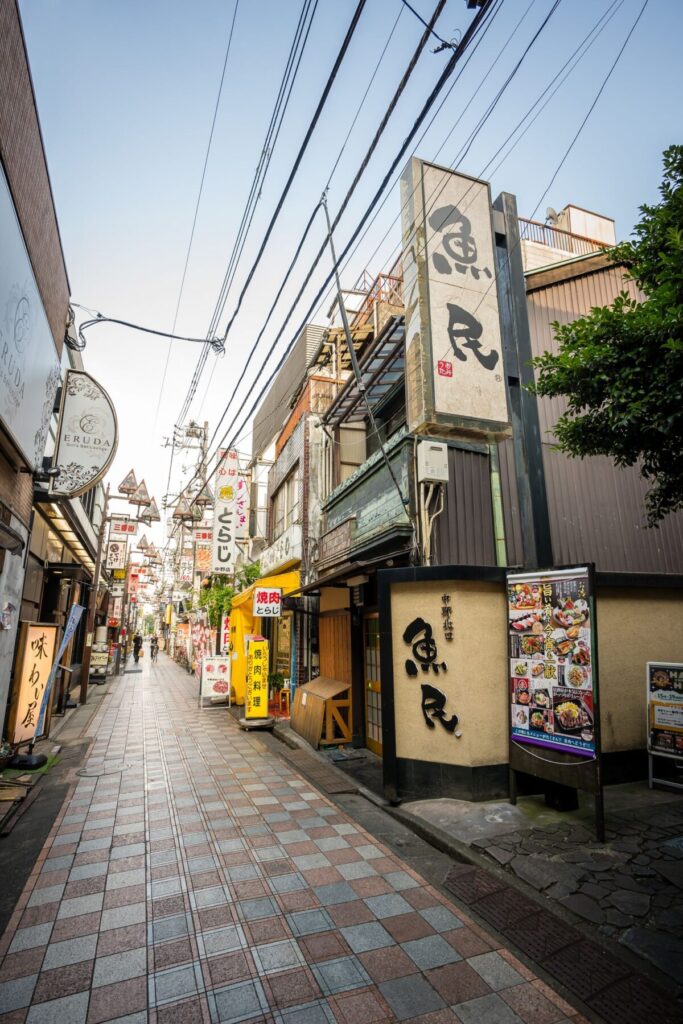
The moments people come home raving about are almost always the ones just outside that bubble. The tiny izakaya down a side street with no English menu and six seats. The grandmother running a guesthouse in a mountain town. The shopkeeper in a rural pottery village. The conversation with the person sitting next to you at a counter. Those places don’t have a tablet with Google Translate ready, and the warmth you get there is directly connected to whether you can meet them even a tiny bit of the way.
And this is where a small amount of Japanese does something that surprises people. In Japanese culture, effort and politeness matter enormously. The effort matters more than getting it exactly right. When you walk into a small shop and say “konnichiwa” properly, or thank someone with a warm “arigatou gozaimasu” and a slight bow, you’re doing more than exchanging words. You’re signalling respect, and people feel it instantly. People soften, and the service warms up. Often that’s when you get the off-menu recommendation, the extra bit of care, the little bow back. Even a few words frequently changes how locals respond to you.
None of that shows up in a translation app. It’s the difference between visiting Japan and connecting with it.
Where the language actually matters most: the rural / off-track factor
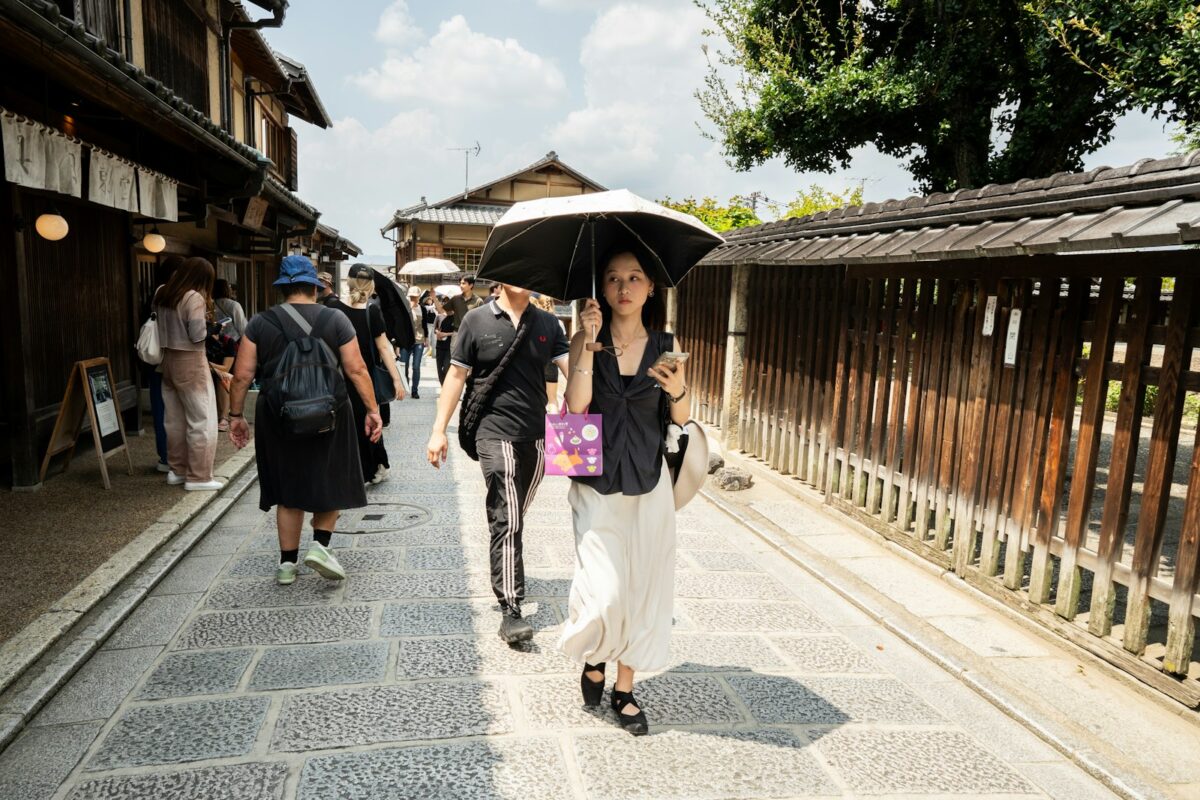
If we had to draw one line to help you decide how much to prepare, it’s this. The more your trip leans rural, local, and food-and-people focused, the more even a little Japanese pays off.
Think about the kind of trip you’re planning:
- Big-city, first-timer, famous sights. Tokyo, Kyoto, Osaka, day trips, well-known attractions. You can do this comfortably with near-zero Japanese and a phone. A handful of polite phrases is a nice bonus, not a necessity.
- Food-led and neighbourhood-led. Izakayas, small counters, markets, standing bars, wandering into places that aren’t in the guidebook. Here a small set of phrases genuinely upgrades your nights. This is where most of the magic lives.
- Rural, onsen towns, hiking, small islands, staying in a family-run ryokan or minshuku. English coverage drops off fast once you leave the big hubs. This is where “nice to have” quietly becomes “really useful,” and where being able to read a few key characters or ask a simple question saves you real hassle.
We say this as people who plan these trips for a living. The itineraries that get travellers well off the tourist trail are also the ones where a little language prep changes the whole texture of the days. This is less about safety and more about how much of the real country actually opens up to you.
Minimum useful vs. nice to have: a realistic framing
People ask us “how much” as if there’s a number of hours. There isn’t. But here’s a practical two-tier framing that our teachers actually use with travellers.
The “minimum useful” tier
This is the small, high-value core. If you do nothing else, do this. It’s a few hours of casual prep, not a course, and it covers the politeness and connection layer that matters most:
- Greetings and thanks: konnichiwa (hello), arigatou gozaimasu (thank you), sumimasen (excuse me / sorry, a Swiss Army knife of a word).
- Basic courtesy: onegaishimasu (please), a simple “yes/no” (hai / iie), and how to apologise politely.
- Survival requests: “Do you have an English menu?”, “How much is this?”, “Where is the toilet/station?”, and being able to say the name of what you want.
- Reading a handful of key characters: the kanji for entrance/exit, men and women (for toilets and baths), and a few food words if you have allergies or dietary needs.
That’s the minimum. Most of it is politeness, not vocabulary. That’s deliberate. The politeness layer buys you more goodwill in Japan than a big vocabulary spoken coldly ever would.
The “nice to have” tier
If you want to go further, and especially if your trip leans rural or food-led, this tier is where the experience really opens up:
- Numbers and money, so you can catch prices and quantities without staring at your phone.
- Ordering with confidence: “I’ll have this,” “one of these,” “is this spicy?”, “it was delicious” (gochisousama deshita, this one earns real smiles).
- Small talk starters: where you’re from, that you love Japan, a compliment about the food or the town. Tiny bridges that turn a transaction into a moment.
- Reading hiragana, which is one of the highest-return things you can do: it lets you sound out menus, place names and signs even when there’s no English.
You will never regret arriving with the “minimum useful” tier. And every phrase you add from the “nice to have” tier is a small door that might open into the best story of your trip.
So, should you learn Japanese before your trip to Japan?
Here’s our verdict, from both the teaching side and the trip-planning side.
No, you don’t need to learn Japanese to travel Japan. If that was your worry, put it down. Book the trip.
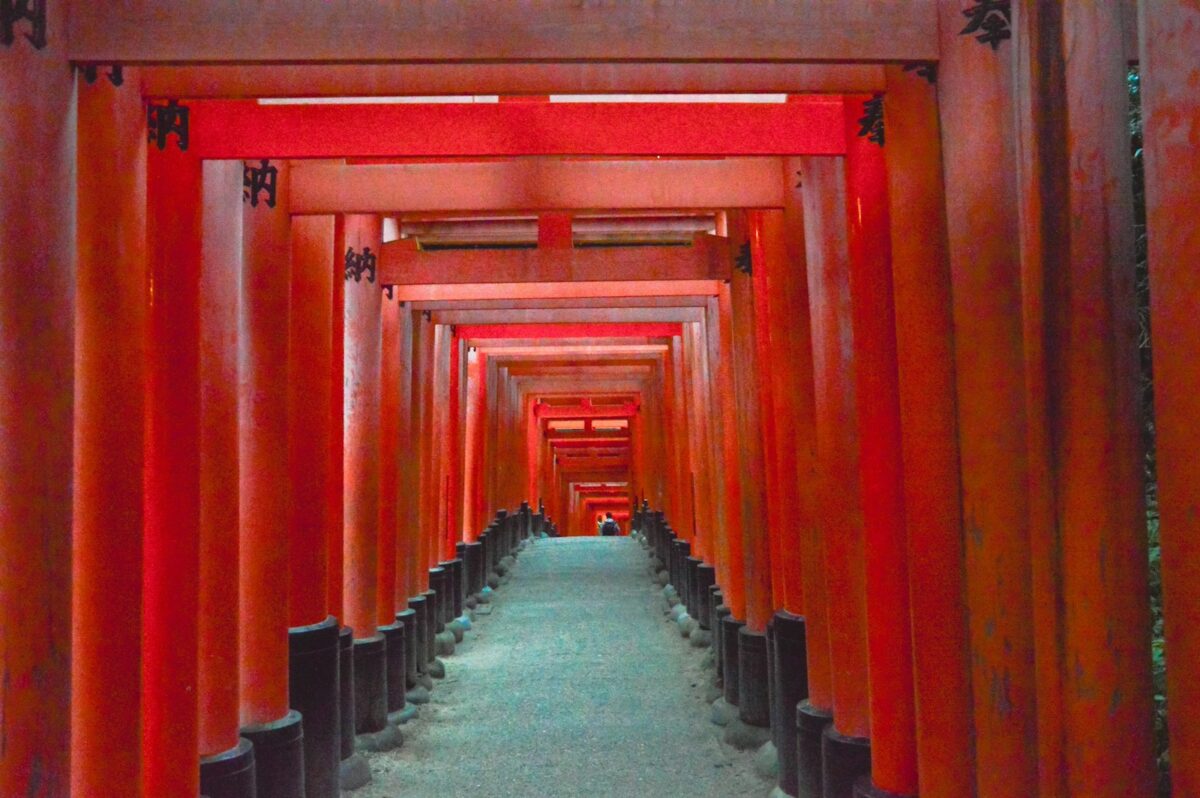
But yes, you should learn a little, and “a little” is the sweet spot. Not because you have to, but because the return on a few hours of the right preparation is out of all proportion to the effort. You’re not studying for an exam. You’re picking up the ten or twenty things that turn you from a visitor being processed into a guest being welcomed. In a culture built around courtesy, that small effort is the whole difference.
The mistake we see is people going to one of two extremes: either “I’ll wing it entirely” (and staying stuck in the tourist bubble the whole time), or “I need to be fluent first” (and never feeling ready). The answer sits comfortably in the middle, and it’s a much smaller, more enjoyable amount of learning than you’d expect.
How Iroha Passport can help: with the language, the trip, or both
Because we do both sides of this, we can meet you wherever you actually are.
If you want the language side: a light “Travel Japanese” focus
You don’t need a full course to get the “minimum useful” and “nice to have” phrases sorted. In our private lessons, our native Japanese teachers can run a light, travel-focused track built entirely around your trip: the greetings, the ordering, the polite phrases, and the confidence to actually use them, taught in fluent English so nothing gets lost. It’s one-to-one and paced to you, whether you’ve got six months before you fly or three weeks.
Our teachers are native Japanese speakers who teach the language to travellers in plain English every day, so travel-ready phrases are what these sessions are built for.
You can start with a £24 trial lesson and tell us your travel dates, and we’ll build the session around your actual trip.
If you want the itinerary side: Travel Planning
And if reading this made you realise the bit you actually want help with is the trip itself (where to go, how many days, how to get past the tourist bubble in the first place), that’s our other job. Our native Japanese planners build Japan itineraries from first-hand knowledge rather than the same recycled top-ten lists, priced in pounds from £15. If you want your trip to include the kind of rural, food-led moments where a little Japanese pays off, we can plan those in deliberately.
You don’t have to choose one. A lot of travellers do both: we plan the trip, then run a couple of travel-focused lessons so you arrive ready to enjoy it.
Wherever you are in the process, the answer to “should I learn Japanese before my trip” is the same: a little goes a very long way, and you don’t have to figure out how much on your own.
- Essential Japanese Phrases for Your Japan Trip — and When You Actually Need Them — the practical phrase list to pair with this article.
- How to Plan a Trip to Japan from the UK: A Step-by-Step Guide — the full trip-planning walkthrough.
About Iroha Passport
This guide is by Iroha Passport, a London-based Japanese lessons and Japan travel service. We’ve been helping learners and travellers in the UK for over six years (previously known as SakuraJapan), so we’re an established name rather than a brand-new one. Our native Japanese teachers, based in London, teach in fluent English — online and in person — with lessons built around your goal (JLPT, travel, anime or business) and clear, published pricing. Our native Japanese team also plans first-hand Japan itineraries for UK travellers, priced in pounds. Iroha Passport is rated ★4.6 on Google (based on 11 Google reviews).