This article contains affiliate links. We may earn a small commission at no extra cost to you.
A night in a ryokan is one of the few things in Japan that most visitors describe afterwards as the best part of the trip. It is also the thing they arrive at most nervous about, because a traditional inn comes with a rhythm and a set of small conventions that nobody explains at the door.
None of it is difficult. This is what actually happens, hour by hour, from arriving to checking out, written by a team of native Japanese speakers so you can enjoy the evening instead of worrying about whether you are doing it right.
What a ryokan is, and what it is not
A ryokan is a traditional Japanese inn. Typically: tatami-mat rooms, futon bedding laid out on the floor, communal or private hot baths, and dinner and breakfast included and served at set times.
It is not simply a hotel with Japanese décor. The price includes two elaborate meals and the use of the baths, the evening follows a schedule, and the staff take a much more active role in your stay than at a hotel. The correct comparison is not a hotel room; it is a small full-board country house where the food is the main event.
Related but different:
- Minshuku: a family-run guesthouse. Simpler, cheaper, often excellent food, less ceremony.
- Onsen ryokan: a ryokan with natural hot spring baths, usually in a hot spring town.
- Business hotel: Western-style, no meals included, half the price or less. See what Japanese hotels are really like.
What it costs, and why
Ryokan are priced per person, including dinner and breakfast, not per room. This surprises British travellers who are used to room rates, and it is the reason ryokan look expensive at first glance.
Rates start from roughly ¥15,000 to ¥20,000 per person for a simple inn and rise a long way from there, with famous onsen ryokan reaching several times that. Once you account for two substantial meals, that figure is more reasonable than it looks, but it is still a splurge rather than a default.
Our usual advice: book one or two ryokan nights in a trip rather than a week of them. Stay in business hotels in the cities and spend the difference on one exceptional night in the mountains or by the sea. We put this in the context of a whole trip budget in How Much Does a Trip to Japan Cost from the UK?
If you want to see what is available on your dates, hot spring areas within easy reach of Tokyo are a good place to start looking, for example accommodation in Hakone on Booking.com (affiliate link). Read the description carefully to check whether meals are included, as some listings are room-only.
Arriving: the afternoon
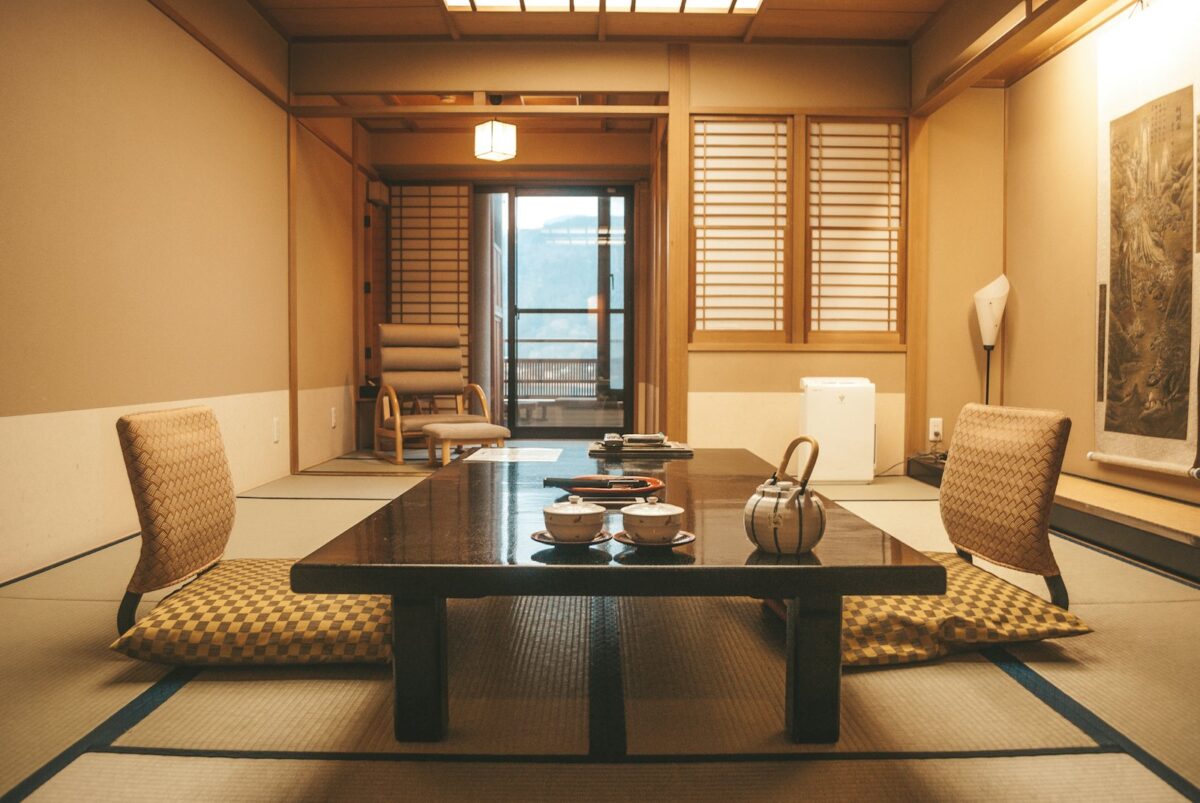
Check-in is usually in the middle of the afternoon, often between about three and six, and this is not flexible in the way a hotel is. Dinner is cooked for a specific time, so arriving late genuinely disrupts the kitchen. If your train is delayed, phone ahead; they would much rather know.
What happens when you arrive:
- Shoes off at the entrance. There will be a step up and slippers waiting. This is the single most important convention in the building.
- You will be shown to your room, often by the person who will look after you all evening.
- Green tea and a small sweet arrive, and you will be asked to confirm your dinner and breakfast times and your bath plans.
- Your room will have no bed. It will have a low table and cushions. The futon is laid out later, usually while you are at dinner.
Slippers come off again on tatami. Tatami is walked on in socks or bare feet, never in slippers, and there is a separate pair of slippers for the toilet that stays in the toilet. Getting this wrong is the most common visitor mistake and nobody will mind, but you will notice yourself doing it.
The yukata
Every guest is given a yukata, a light cotton robe, and in a ryokan it is not a novelty. It is what you wear for the rest of the stay: to the bath, to dinner, around the inn, and in a hot spring town often out into the street.
Two practical points. Wrap the left side over the right; the other way round is used for funerals. And there is usually a belt, plus a jacket in colder weather. If it seems too short, ask for a longer size rather than assuming they only have one.
The bath
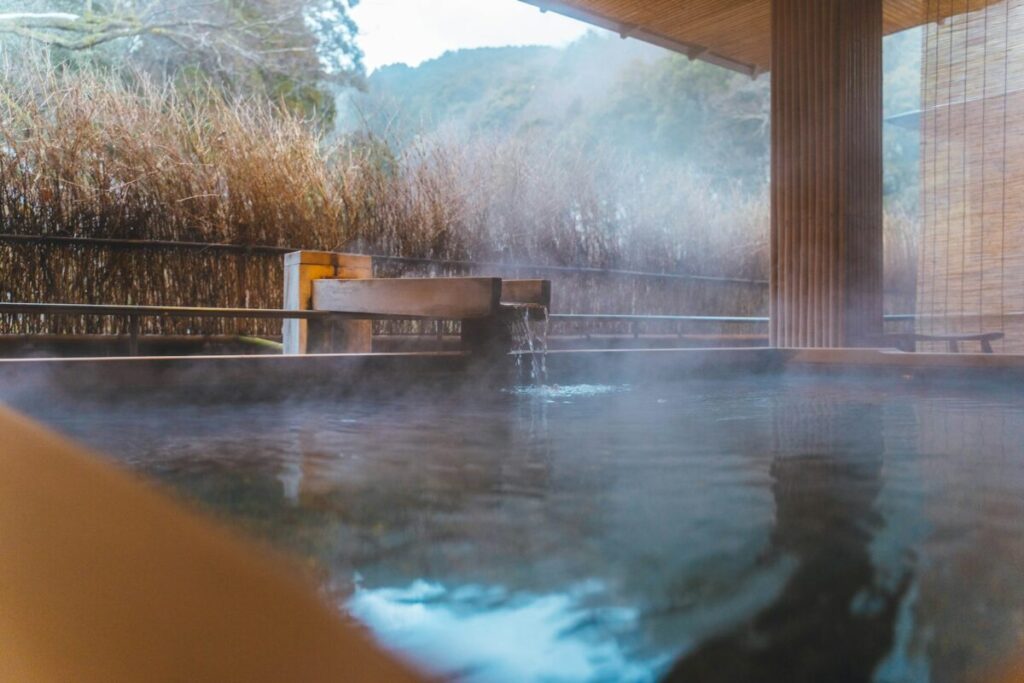
For many people the baths are the reason to come. If the ryokan is in a hot spring area, the water is the whole point, and it is worth going in more than once: before dinner, after dinner, and again in the morning.
The rules are simple and non-negotiable: wash and rinse thoroughly at the seated showers first, get into the bath clean, no swimwear, no towel in the water, and no soap or shampoo in the bath itself. Baths are usually separated by gender, with the signs sometimes swapped between evening and morning so everyone gets both views.
Our onsen guide for first-timers covers this in detail. If you have tattoos, check the inn’s policy before booking, because rules vary widely and some ryokan offer private baths as a solution. See Tattoos in Japan.
Dinner
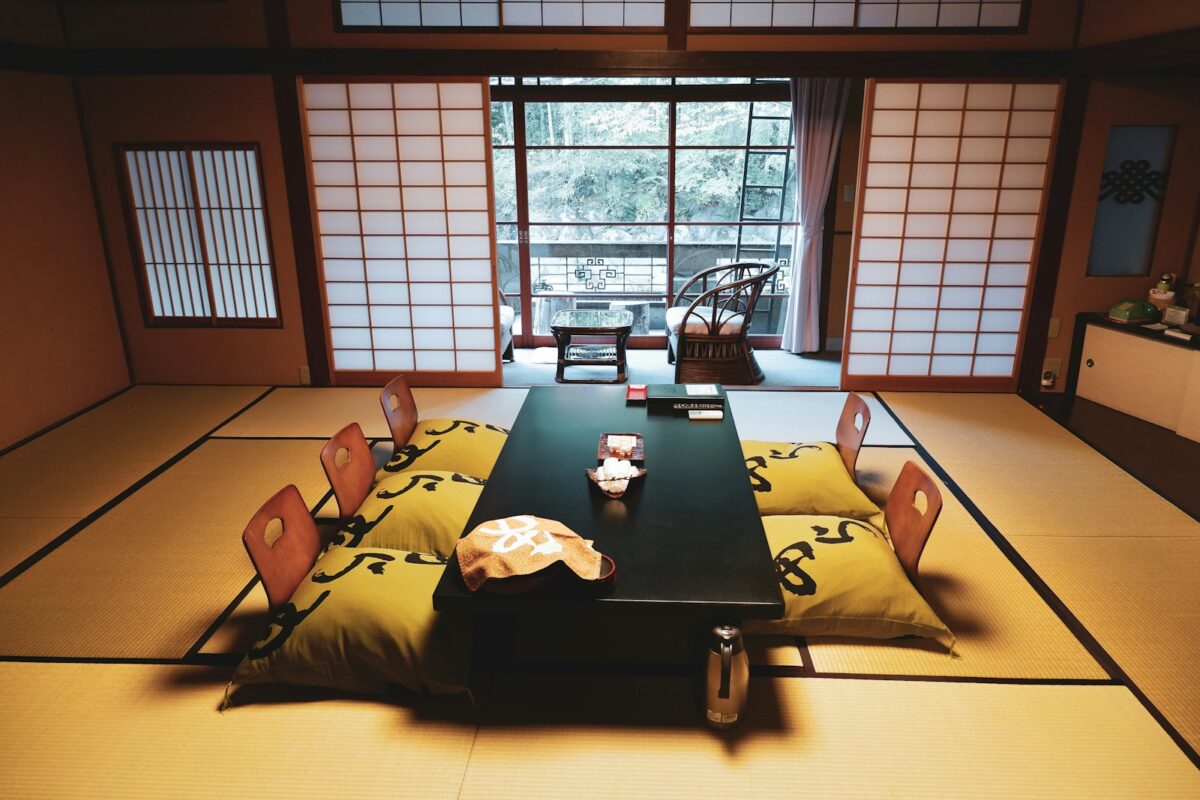
Dinner is the centre of the stay. Depending on the inn it will be served in your room or in a dining room, at the time you agreed, and it will be a multi-course seasonal meal built around whatever the region is known for.
What to expect:
- Many small dishes arriving in sequence, often ten or more, each intended to be eaten in a particular order.
- Ingredients you will not recognise. Ask; the staff are usually delighted to explain, and this is where a little Japanese pays off enormously.
- Small portions that add up to a very large meal. Pace yourself early.
- Rice, soup and pickles near the end, which signals the meal is closing.
Dietary requirements must be arranged when you book, not on arrival. Vegetarian and vegan requests in particular need notice, because dashi stock made from fish is in almost everything by default. Our guide to eating vegetarian and vegan in Japan explains what to ask for. Allergies should be stated clearly and in writing when booking.
Table manners are not as strict as people fear, but a few things are worth knowing, and our Japanese dining etiquette guide covers them.
The evening and the futon
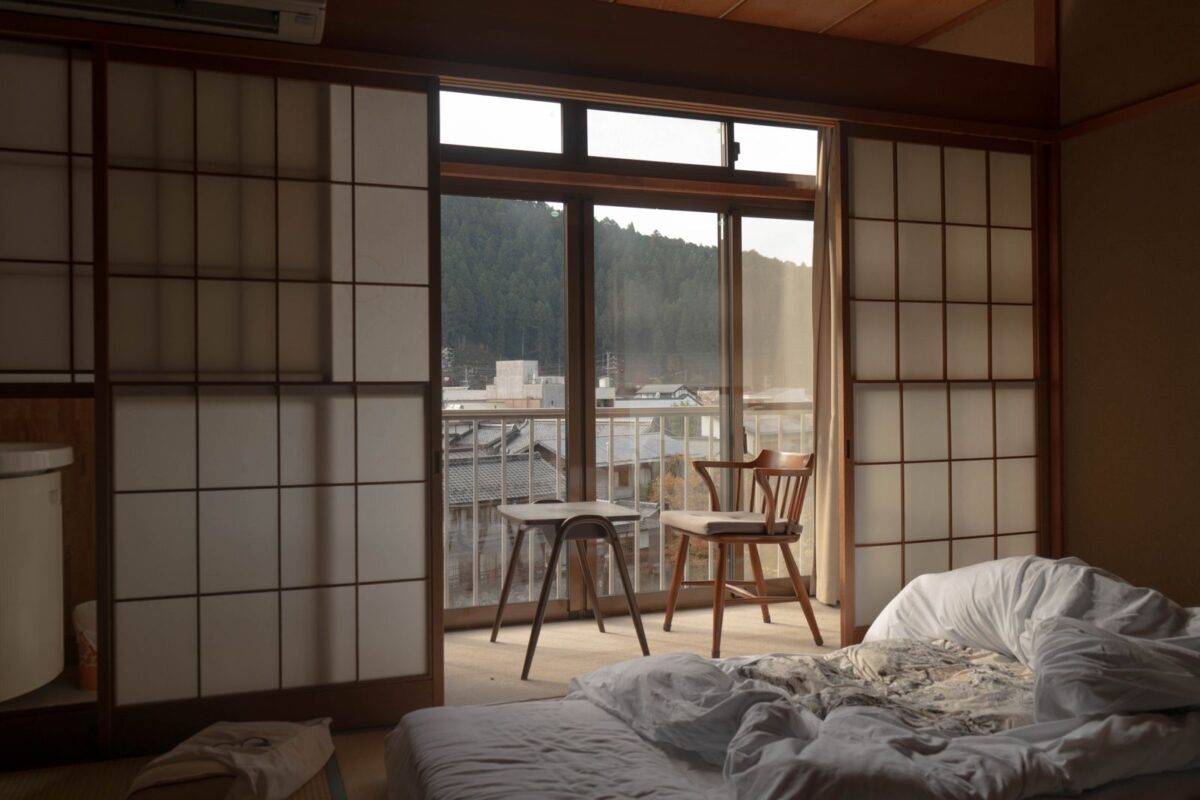
While you are at dinner, or shortly after, staff will lay out the futon in your room. If dinner is served in your room, they will clear it and lay out the bedding afterwards. You do not need to do anything, and you should not try to help beyond moving out of the way.
Futon on tatami is firmer than a Western mattress and most people sleep well on it. If it is not enough padding, ask for an extra one; this is completely normal.
Evenings in a ryokan are quiet by design. Many have a small lounge, a shop selling local things, and sometimes a table tennis table, which is a genuine and slightly unexpected tradition. In hot spring towns, walking out in your yukata and geta to visit the public baths or a bar is part of the experience.
Breakfast and leaving
Breakfast is Japanese and substantial: grilled fish, rice, miso soup, pickles, egg, and a collection of small dishes. Some ryokan offer a Western option, and many do not. It is served early, usually between about seven and nine, and again at a time you agreed the day before.
Check-out is usually around ten in the morning, earlier than a hotel. Ryokan turn rooms around carefully for the evening’s guests, so late check-out is rarely available.
Tipping is not customary and can cause awkwardness. If you want to thank the person who looked after you, saying so warmly is worth far more.
How to choose one
- Decide what you want from it: the bath, the food, the view, or the building. Very few inns are outstanding at all four, and knowing your priority makes choosing much easier.
- Check whether meals are included. Some listings are room-only, which changes both the price and the experience entirely.
- Check the bath. Natural hot spring or ordinary bath; indoor, outdoor, or private; and whether private baths need booking.
- Check the room. Some rooms have their own toilet and washbasin, others share facilities down the corridor.
- Check access. Many of the best ryokan are a bus ride from a station, and some run a shuttle if you tell them your arrival time.
- Read the meal times and make sure they fit your travel day. A ryokan is a destination, not a stopover.
Frequently asked questions
Is a ryokan worth the money?
For one or two nights of a trip, in our view yes, because it is an experience rather than accommodation. For a whole trip, it is expensive and the meals become repetitive.
Do I have to eat dinner at the ryokan?
If dinner is included, you are expected to, and it is usually the highlight. Room-only rates exist at some inns if you would rather eat out.
Can I stay in a ryokan alone?
Yes, though single occupancy often carries a supplement because pricing is per person with meals for a room designed for two or more.
What if I do not want to use the communal bath?
Look for an inn with private baths that can be reserved, or a room with its own bath. Both exist, and both cost more.
Do I need to speak Japanese?
No, but a ryokan is the single place on a trip where a little Japanese changes the experience most, because so much of the evening involves being looked after by one person. Even a few phrases for greeting, thanking and asking about a dish make it warmer.
Are children welcome?
At many, yes, and some have family rooms and children’s meals. A few upmarket inns are adults-only, so check before booking.
Get the most out of the evening
The difference between a pleasant ryokan night and a memorable one is usually conversation: asking what a dish is, where the water comes from, what the town is known for. That is exactly the kind of Japanese we teach in Travel Japanese, a short focused block with a native Japanese teacher before you travel.
Book a Travel Japanese session
Affiliate disclosure. This article contains an affiliate link to Booking.com. If you book through it in the same browsing session, Iroha Passport may receive a small commission once your stay is completed, at no extra cost to you. We link to accommodation search pages rather than specific properties, and we are not paid to recommend any individual inn. Prices and availability change constantly, so please check current listings.
About Iroha Passport
Iroha Passport helps English speakers learn Japanese and plan their trips to Japan. Lessons are taught by native Japanese teachers living in London, in person or online.
By Iroha Passport