Deciding when to visit Japan usually starts with weather and cherry blossom. It is worth adding a third question: what will actually be happening while you are there?
Japan runs on a dense calendar of festivals, or matsuri, and seasonal observances. Some fill entire cities and are worth building a trip around. Others are quiet, local and far more interesting to stumble into than to plan for. Knowing roughly what happens each month lets you either aim for something or, just as usefully, avoid the weeks when every hotel in a city is full.
This is a month-by-month guide written by a team of native Japanese speakers. One important caveat before you plan anything around it: dates move. Some festivals are fixed to a date, some to a weekend, some shift with the lunar calendar, and any of them can be changed or cancelled for weather or local reasons. Always confirm the current year on the official prefectural or city tourism site before booking.
January: quiet, cold and unexpectedly special
New Year is the most important holiday in the Japanese calendar and it is a family occasion rather than a party. In the first days of January, shrines fill with people making the year’s first visit, many shops and restaurants close, and cities feel unusually calm.
If you visit in early January, expect closures and reduced transport, and expect a side of Japan most tourists never see. Later in January is one of the cheapest and least crowded times of year, with clear winter skies in much of the country. Coming of Age Day, a public holiday for young adults turning twenty, falls in mid-January and fills shrines and city centres with formal kimono.
February: snow, plum blossom and bean throwing
Setsubun, at the beginning of February, marks the turn of the seasons. People throw roasted soy beans to drive out bad luck, temples hold public ceremonies, and supermarkets sell an enormous quantity of beans and long uncut sushi rolls.
February is also snow festival season in the north, with large-scale ice and snow sculpture events in Hokkaido that draw international visitors and fill accommodation. In the south and centre, plum blossom arrives before the cherries and is far less crowded, which many people quietly prefer.
March: doll displays and the first blossom
Hina Matsuri, on the third of March, celebrates girls in the family with elaborate displays of dolls in homes, shops and museums. It is not a street festival, but the displays are everywhere and worth looking out for.
Cherry blossom usually begins in the far south in March and moves north over several weeks. Forecast dates are published each year and change constantly, so if blossom is your reason for coming, build flexibility into the route rather than booking a single city on a fixed date. Our season-by-season guide to visiting Japan goes into this properly.
April: blossom, and the busiest weeks of the year
April is peak Japan. Blossom season reaches most of the main tourist cities, parks fill with people eating and drinking under the trees, and the whole country looks like the photographs.
It is also expensive and crowded, and the last days of April run into Golden Week, a cluster of public holidays spanning late April and early May. During Golden Week, domestic travel surges, trains and hotels book out, and prices rise. If you can avoid those specific days, do; if you cannot, book early and stay in one place rather than moving.
May: the big city festivals begin
Once Golden Week is over, May is one of the best months of the year: warm, dry, green and comparatively calm.
Two of Tokyo’s biggest traditional festivals fall in May. Sanja Matsuri, based at Asakusa Shrine, is held over the third full weekend and sends around a hundred portable shrines through the streets of Asakusa. Kanda Matsuri, centred on Kanda Myojin and processing through Kanda, Nihonbashi and Akihabara, takes place in mid-May, but the full version runs only in odd-numbered years; in even years a much smaller version is held instead. Both are genuine neighbourhood events rather than tourist displays, and because they happen in the middle of the city they are among the easiest big festivals to attend without planning. Confirm the current year on each shrine’s own site.
June: rain, hydrangeas and fewer people
Most of Japan has a rainy season through June, which puts a lot of visitors off. It should not. Temples and gardens are at their best in the wet, hydrangeas are everywhere, hotels are cheaper, and famous sites are noticeably less crowded.
Festival activity is lighter this month, so June suits a trip built around gardens, museums and food rather than events. If your dates land here, How to Enjoy a Rainy Day in Japan is the companion piece to this article.
July: the biggest month for matsuri
July is festival season proper, and it is hot and humid.
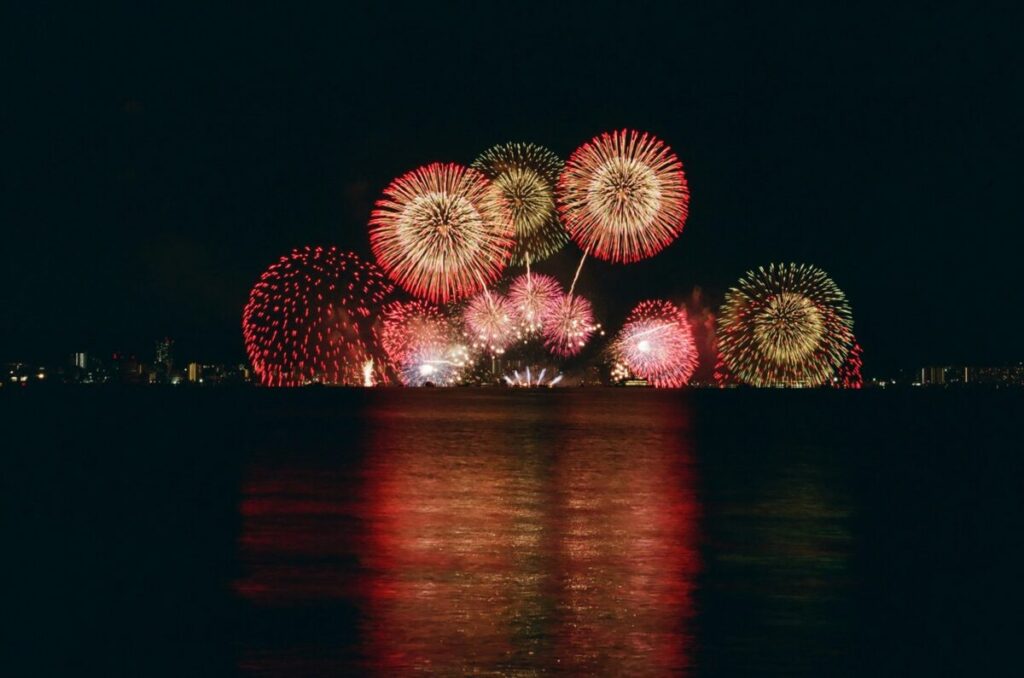
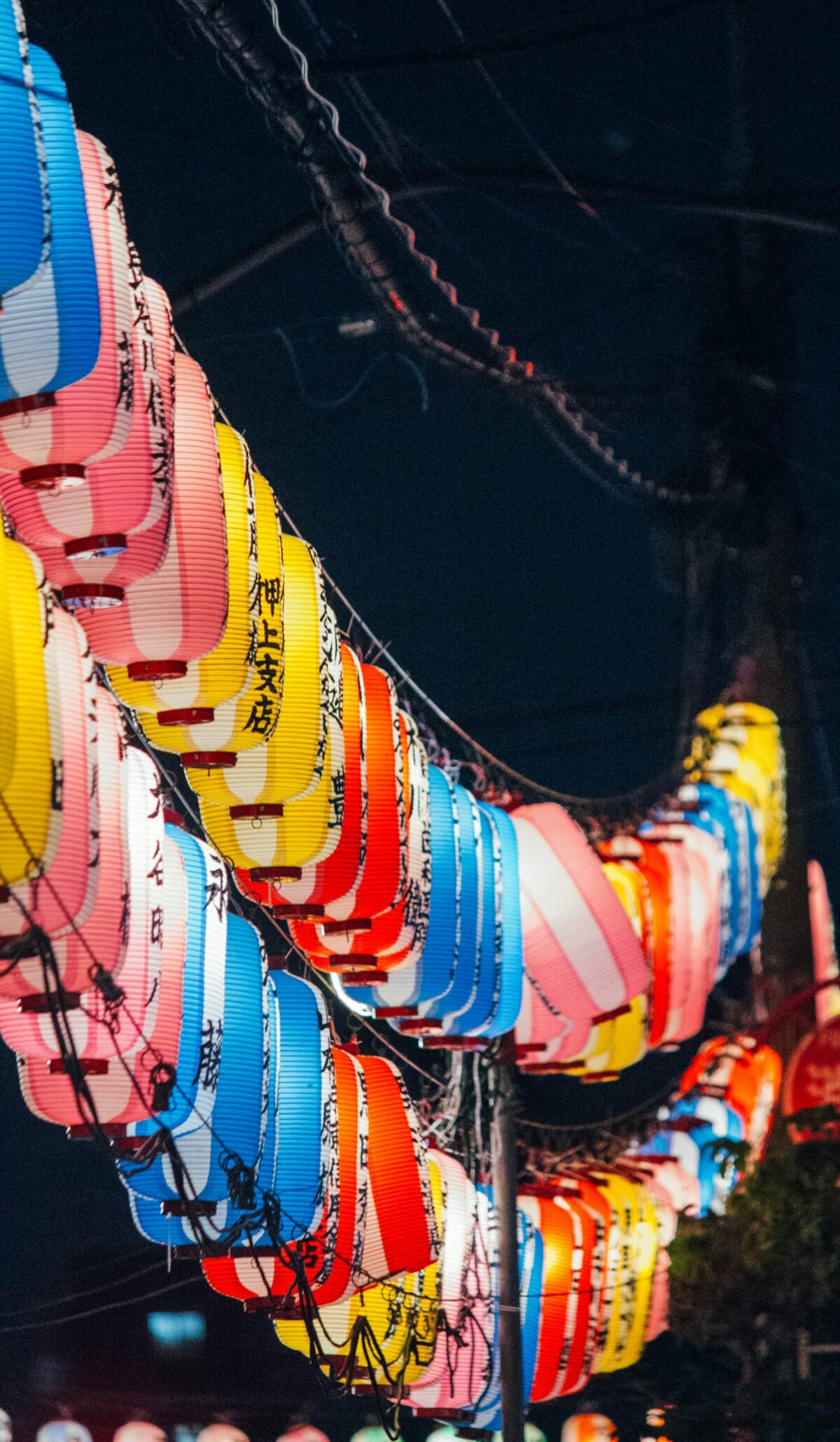
Kyoto’s Gion Matsuri runs through the whole of July, with enormous decorated floats processing through the city on the main days. Osaka’s Tenjin Matsuri, in late July, combines a land procession with a river procession of boats and fireworks. Tokyo and many other cities hold large summer fireworks displays, where crowds arrive hours early with food and drink and a good number of people wear yukata.
Fireworks displays are one of the most enjoyable things a visitor can do in Japan, and also one of the most crowded. Arrive very early, accept that leaving will take a long time, and treat the wait as part of the evening.
August: dance festivals, Obon and the return home
August is the other great festival month. In the north, Aomori’s Nebuta Matsuri parades huge illuminated floats and Akita’s Kanto Matsuri balances tall poles hung with paper lanterns. In Shikoku, Tokushima’s Awa Odori fills the streets with dance troupes, and visitors are often welcome to join the less formal groups.
Obon, in mid-August, is when families return to their home towns to honour their ancestors. It is deeply important culturally and, practically speaking, it is one of the busiest travel weeks of the year. Trains and flights book out, some businesses close, and cities can feel emptier while the countryside fills.
Bon dances are held in neighbourhoods all over the country during this period, often in a local park or temple grounds, and a small one is far more charming than a famous one.
September: typhoons, harvest festivals and the turn of the season
September is the tail of summer and the peak of typhoon season, particularly in the south and west. Typhoons rarely ruin a whole trip but can close transport for a day, so keep the itinerary loose and take travel insurance seriously.
It is also harvest festival season, with local shrine festivals in towns across the country and, in the Kansai region, the Kishiwada Danjiri Matsuri in Osaka, where teams pull heavy wooden carts through the streets at a genuinely alarming speed. By late September the humidity breaks and the country becomes very pleasant.
October: autumn colour begins, and Kyoto puts on a show
October is arguably the best month to visit. The weather is settled, the crowds are thinner than spring, and autumn colour starts in the north and at altitude.
Kyoto’s Jidai Matsuri, a large historical costume procession, is held in late October, and the Kurama Fire Festival takes place the same evening in the hills north of the city. In central Japan, Takayama’s autumn festival brings out its ornate floats in early October, and in Kyushu, Nagasaki Kunchi is held in the first week of the month. If you want the atmosphere of spring without the prices of spring, October is the answer.
November: autumn leaves at their peak
November is when autumn colour reaches Kyoto, Tokyo and most of the popular destinations, and it is spectacular. Temples run evening illuminations, and the most famous gardens can be as busy as blossom season, so go early in the day.
Mid-November brings a family celebration for children of three, five and seven, and shrines fill with small children in formal dress at weekends around it. It is charming to witness and not something to plan around.
December: illuminations, markets and the year winding down
December is cold, clear and underrated. Cities put on large winter illuminations, and December is comfortable for walking and eating. Saitama’s Chichibu Night Festival, in early December, combines tall floats with a winter fireworks display, and draws a surprisingly large crowd for the time of year.
The last days of the year shift into New Year preparation. Many people visit a temple at midnight on the thirty-first to hear the bells rung, which is one of the quietest and most memorable things you can do in Japan as a visitor. Note that from around the twenty-ninth of December to the third of January, many restaurants and shops close.
How to actually use this calendar
- Decide whether you are aiming at an event or avoiding a crowd. Both are valid strategies, and they lead to opposite dates.
- Check the exact dates for your year on official city or prefectural tourism sites. Do not rely on any article, including this one, for a date.
- Book accommodation first if a major festival is involved. Hotels in festival cities fill months ahead, and prices rise steeply.
- Avoid moving cities during Golden Week, Obon and New Year if you possibly can.
- Leave a spare day. Festivals run long, get delayed by weather, and are exhausting in summer heat.
- Arrive early and expect to stand. For the big ones, several hours early is normal for a good position.
Festival etiquette in ninety seconds
- Do not block the route of a procession or a portable shrine. Follow what everyone around you is doing.
- Photography is generally fine in public, but be careful around people in formal dress, children and religious ceremonies. Ask if in doubt.
- Street food is part of the point. Eat near the stall rather than walking, and hold on to your rubbish, as bins are scarce. See our guide to rubbish and recycling.
- If a festival takes place at a shrine or temple, the usual respectful behaviour still applies. Our shrine and temple etiquette guide covers it.
- Yukata are welcome rather than appropriative at summer festivals, and can be rented easily in tourist areas.
- A few words of Japanese go a long way in a crowd of locals. Our essential phrases guide has the useful ones, and everyday etiquette in Japan covers the rest.
Frequently asked questions
What is the best month for festivals in Japan?
July and August hold several of the largest and best known: Gion Matsuri in Kyoto, Tenjin Matsuri in Osaka, Nebuta in Aomori, Kanto in Akita and Awa Odori in Tokushima. August is also the hottest month of the year in most of the country, and the Obon period is one of the busiest times for domestic travel. If that puts you off, October is the alternative: Jidai Matsuri and the Kurama Fire Festival in Kyoto, Takayama’s autumn festival and Nagasaki Kunchi all fall in that month, and the weather is far more comfortable.
Should I avoid Golden Week and Obon?
If you can. Domestic travel peaks, trains and hotels fill, and prices rise. If your dates are fixed, book early and minimise the number of times you move city.
Can visitors take part, or only watch?
It varies. Some street dance festivals actively welcome visitors into open groups, while processions involving portable shrines are usually for local participants. Watch first, and follow any instructions from stewards.
Do I need tickets?
Most street festivals are free to watch. Paid seating exists for some fireworks displays and processions, and it can be worth it if you want a guaranteed view without a four-hour wait.
What happens to festivals in bad weather?
Some continue regardless, some postpone to a reserve date, and some are cancelled. Check the official account on the day, and have an indoor alternative in mind.
Build the trip around the right week
Getting the dates right is the single biggest lever on how a Japan trip feels, and it is difficult to judge from outside the country. Our Japan trip planning service starts at £15 and is built by Japanese people who live here, so we can tell you what is actually on during your dates, what is worth reorganising the route for, and which weeks to stay put.
See Japan trip planning options
Read our season-by-season guide
About Iroha Passport
Iroha Passport helps English speakers learn Japanese and plan their trips to Japan. Lessons are taught by native Japanese teachers living in London, in person or online.
By Iroha Passport