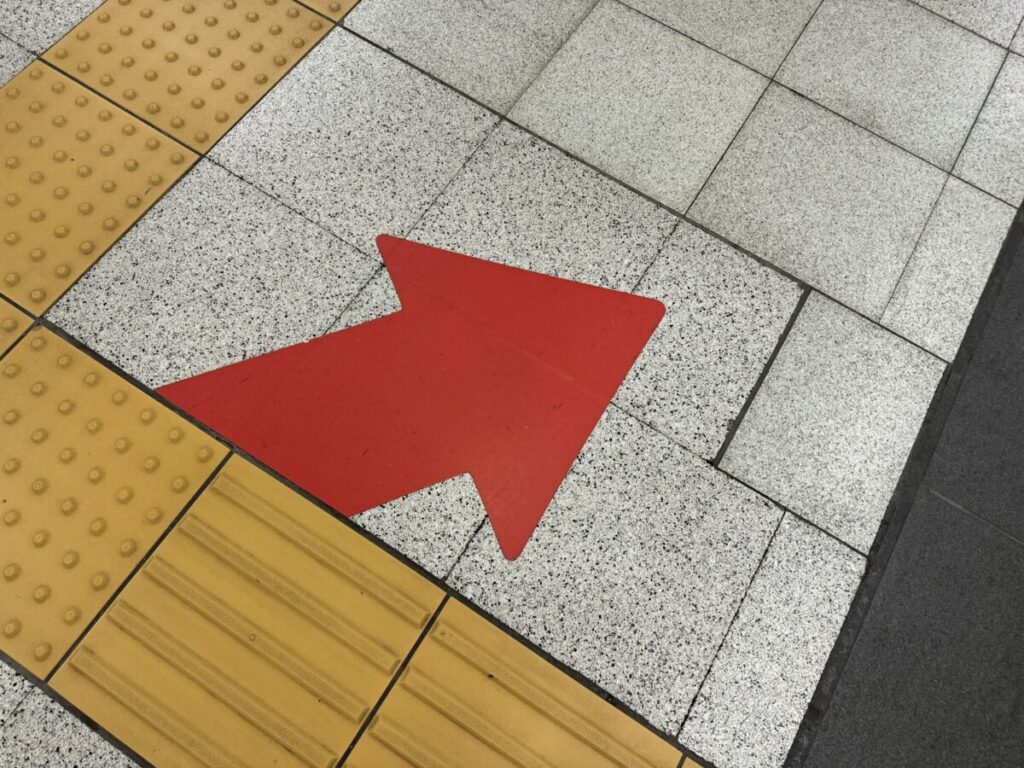
Japan’s signs, stations and addresses can look bewildering on your first morning — a wall of unfamiliar characters, station complexes the size of small towns, and an address system that works nothing like the UK’s. The reassuring truth is that you don’t need to read Japanese fluently to find your way. With a handful of key signs, a rough sense of how information is organised, and a phone in your pocket, getting around becomes surprisingly manageable. This is a practical, honest guide to Japanese signs for tourists — how to read Japanese station signs, decode everyday notices and understand addresses — written by a native Japanese team for UK travellers who want to feel confident before they land.
The Writing Systems, Very Briefly
Japanese uses three scripts — kanji (characters borrowed from Chinese), and two phonetic alphabets, hiragana and katakana — often alongside romaji (the Roman alphabet). You’ll never need to learn them to travel, but recognising a few common characters is genuinely useful. Katakana is the one worth a glance: it’s used for foreign loan-words, so a shop sign or menu item written in katakana is often something you already know — コーヒー (koohii, “coffee”), ホテル (hoteru, “hotel”) or タクシー (takushii, “taxi”). Kanji carry meaning rather than sound, which is why a single character like 出 (“exit”) or 駅 (“station”) can tell you what you need at a glance. Between the two phonetic scripts, hiragana has rounded, flowing shapes and is used for Japanese words and grammar, while katakana is sharper and more angular. Most transport and tourist signage also carries English, so treat the characters below as a helpful backup rather than something to memorise.
How to Read Japanese Station Signs
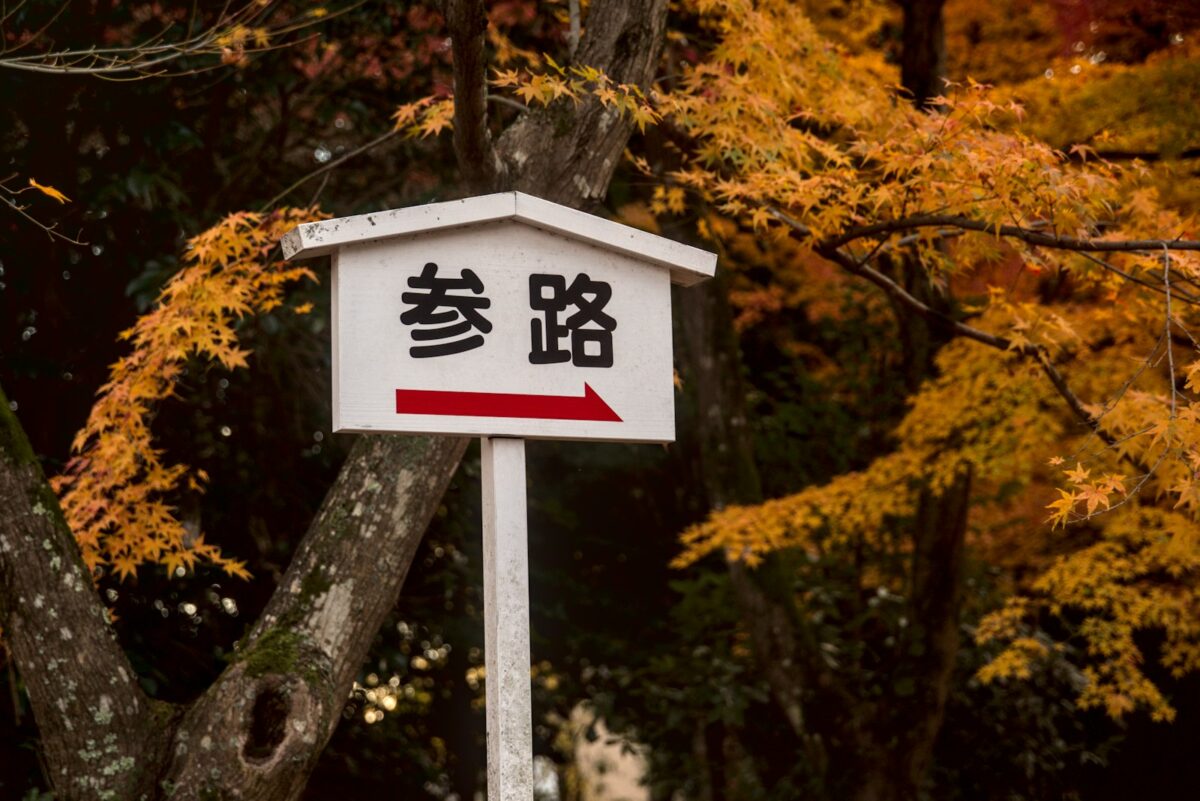
Large stations feel like mazes, but the signage is logical and almost always bilingual, and a few words unlock most of it. Look first for 入口 (entrance) and 出口 (exit); big stations number their exits and group them by direction, so you’ll also see 北口 (north exit), 南口 (south), 東口 (east) and 西口 (west). Platforms are marked as 〜番線 (bansen, “platform ~”), and the character to watch for when changing trains is 乗換 (norikae, “transfer”). Japan also colour-codes its lines and gives every station a letter-and-number code — the Ginza line is orange and Shibuya is “G-01,” for example — so you can match a sign to your map without reading a single kanji. If you’re still getting to grips with tapping in and out, buying tickets and using IC cards, our guide to getting around Japan by train walks through the whole flow step by step.
Finding Your Way Out of a Big Station
Stations such as Shinjuku, Tokyo and Osaka-Umeda are genuinely huge, and the single most useful habit is to know your exit before you reach the gates rather than after. When you look up a destination in a maps app it will usually name the exit to aim for — “New South Exit” or “Exit A3” — and following that name is far quicker than wandering. Yellow overhead signs point toward exits and platforms; blue and green signs usually indicate transfers and facilities. Numbered exits (A1, B2 and so on) correspond to the streets and landmarks above ground, and there are often area maps by the ticket gates showing what each exit leads to. If you take a wrong turn, don’t worry — staff at the ticket gates help lost visitors all day long, and simply showing them your destination on your phone is enough.

Everyday Signs You’ll See Around Town
Away from the station, the same handful of signs keeps reappearing, and spotting them makes daily life smoother. The most useful are お手洗い or トイレ (toilet), 案内 (information) and 非常口 (emergency exit — a green running-figure symbol you’ll recognise instantly). On shops and restaurants, 営業中 means “open” while 準備中 or 閉店 means “not open / closed”; a hanging noren curtain across a doorway is another quick clue that a restaurant is serving. On doors, 押 means push and 引 means pull. You’ll also meet 立入禁止 (no entry) and 撮影禁止 (no photography) at temples and some shops — worth knowing so you can be a considerate guest. None of this requires study; a little familiarity simply turns hesitation into confidence.
Reading Menus, Prices and Konbini Shelves
Food is where a little sign-reading pays off fastest. Many restaurants display plastic food models or photo menus in the window, so you can often order by pointing. Prices are shown in yen with the ¥ symbol or the kanji 円 (en); 税込 means “tax included” and 税抜 means “before tax.” Ticket-machine restaurants — common for ramen and set meals — have you buy a meal ticket first, so look for photos on the buttons and don’t be shy about asking staff for help. In a convenience store, katakana labels are your friend once again. If you’d like to prepare a few useful food phrases before your trip, a short burst of Travel Japanese covers exactly this kind of everyday situation.

How Japanese Addresses Work
This is where many visitors come unstuck: Japanese addresses generally aren’t based on street names and house numbers the way UK addresses are. Instead they narrow from large area to small — prefecture (都道府県), city (市), ward (区), district and neighbourhood (町・丁目), and finally a city block and building number (番・号). A Tokyo address might read “Shibuya-ku, Jingumae 3-chōme, 1-30,” which pinpoints a block rather than a spot on a named street. Because of this, even locals and taxi drivers often rely on maps, landmarks and phone numbers rather than the address alone. The practical takeaway is simple: save your destination in a maps app before you set off and, where you can, note a nearby landmark or the venue’s phone number. Hotels will happily write their address in Japanese on a card for you to show a taxi driver — a small, old-fashioned trick that still works beautifully.

Let Your Phone Do the Reading for You
Modern apps remove most of the difficulty. A maps app will guide you door to door and even tell you which exit to use, which solves the two hardest problems — stations and addresses — in a single move. A translation app with a camera mode instantly translates signs and menus when you point your phone at them, turning a wall of kanji into plain English in seconds. It’s worth setting up offline maps and a downloaded language pack before you travel, so a patchy signal never leaves you stranded. Between clear bilingual signage and these two tools, you can handle almost every sign you’ll meet — with the characters below as reassuring backup.
A Few Characters Worth Knowing
If you learn nothing else, these are the characters that repay the effort — the ones that appear on exits, toilets and platforms across the country:
- 入口 / 出口 — entrance / exit
- お手洗い・トイレ — toilet
- 非常口 — emergency exit
- 駅 — station
- 乗換 — transfer (change trains)
- 案内 — information
- 北 / 南 / 東 / 西 — north / south / east / west
- 押 / 引 — push / pull
Want to test yourself? Try the quick sign-reading quiz below — ten real signs you’ll meet in stations and on the street.
Interactive · Iroha Passport
Can you read these Japanese signs?
What does this sign mean?
出口
When You’re Lost, This Always Works
Even seasoned travellers take a wrong turn, and Japan is a reassuring place to be lost in. Station and shop staff are patient and used to helping visitors, and you rarely need more than a smartphone showing where you want to go. A convenience store (konbini) makes a dependable anchor point — bright, everywhere, and the staff can usually point you in the right direction. In residential areas, look for a small police box called a kōban, whose officers help people find addresses as a matter of routine. A polite “Sumimasen” (excuse me) and a finger pointed at your screen will get you a long way. Knowing that help is always close by is, in the end, what turns unfamiliar signs from a worry into part of the adventure.
Building Confidence with Signs
The more you travel, the more familiar these characters become, almost without effort. On your first day a station might feel like a wall of symbols; by the end of your trip you’ll be spotting 出口 and お手洗い at a glance. That growing familiarity is quietly satisfying, and it’s a big part of what makes independent travel in Japan feel rewarding rather than daunting. A small amount of curiosity turns every sign from an obstacle into a tiny puzzle you can solve.
Conclusion
Reading Japan is far less daunting than it looks. Learn to spot a few key signs, understand that addresses run from large area down to small block, and lean on your maps and translation apps, and you’ll move through stations, streets and neighbourhoods with ease. A little familiarity is all it takes to turn that first-morning bewilderment into quiet confidence — and every trip makes it easier still. If you’re wondering how much you can manage in English alone, our honest look at whether English will get you by in Japan is a natural companion to this guide.
Want your route, transfers and destinations mapped out before you go, so you never have to puzzle over a sign under pressure? Our native Japanese team can prepare the practical details for you through Travel Planning. And if you’d like to read and say a little yourself, Travel Japanese is a friendly place to start.
About Iroha Passport
Iroha Passport is a London-based Japanese language and travel service with over six years of experience. Our native Japanese team offers honest, practical guidance alongside Travel Planning and Travel Japanese. By Iroha Passport.