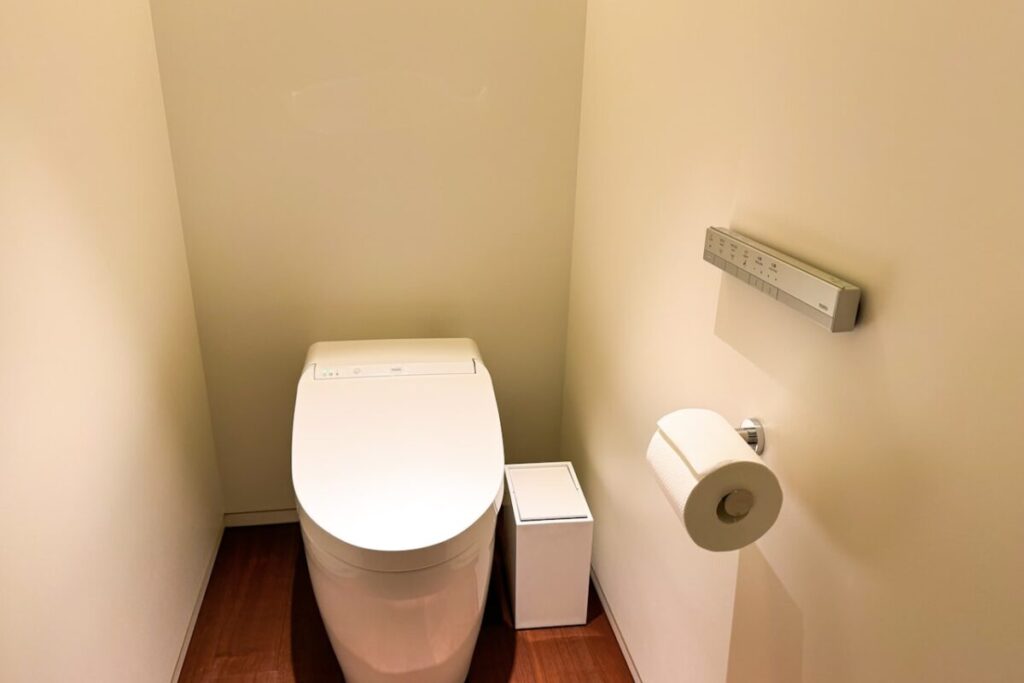
Few things sum up Japan’s blend of high technology and everyday comfort better than its toilets. First-time visitors are often amazed by heated seats and a panel of buttons — and just as often puzzled by a traditional squat toilet in an older station or park. This guide has Japanese toilets explained simply: what the washlet buttons do, how to use a Japanese toilet of either kind, where to find clean public facilities, and the small points of etiquette that make you a considerate guest. Written by a native Japanese team for UK travellers, it’s designed to remove one more little worry before you go.
The Washlet: Japan’s High-Tech Toilet
The star of the show is the washlet — an electronic toilet with a warmed seat and a built-in bidet. You’ll meet them almost everywhere: hotels, restaurants, department stores and most homes. At their simplest they feel entirely familiar; you can sit down, use the toilet and flush without touching anything unusual. What makes them special is the row of controls to the side or on the wall, offering a gentle warm-water spray, adjustable pressure and temperature, and a heated seat that’s a small luxury on a cold morning. There’s nothing to be nervous about: everything is optional, and the ordinary flush always works the way you’d expect.
How to Use a Japanese Toilet: The Control Panel
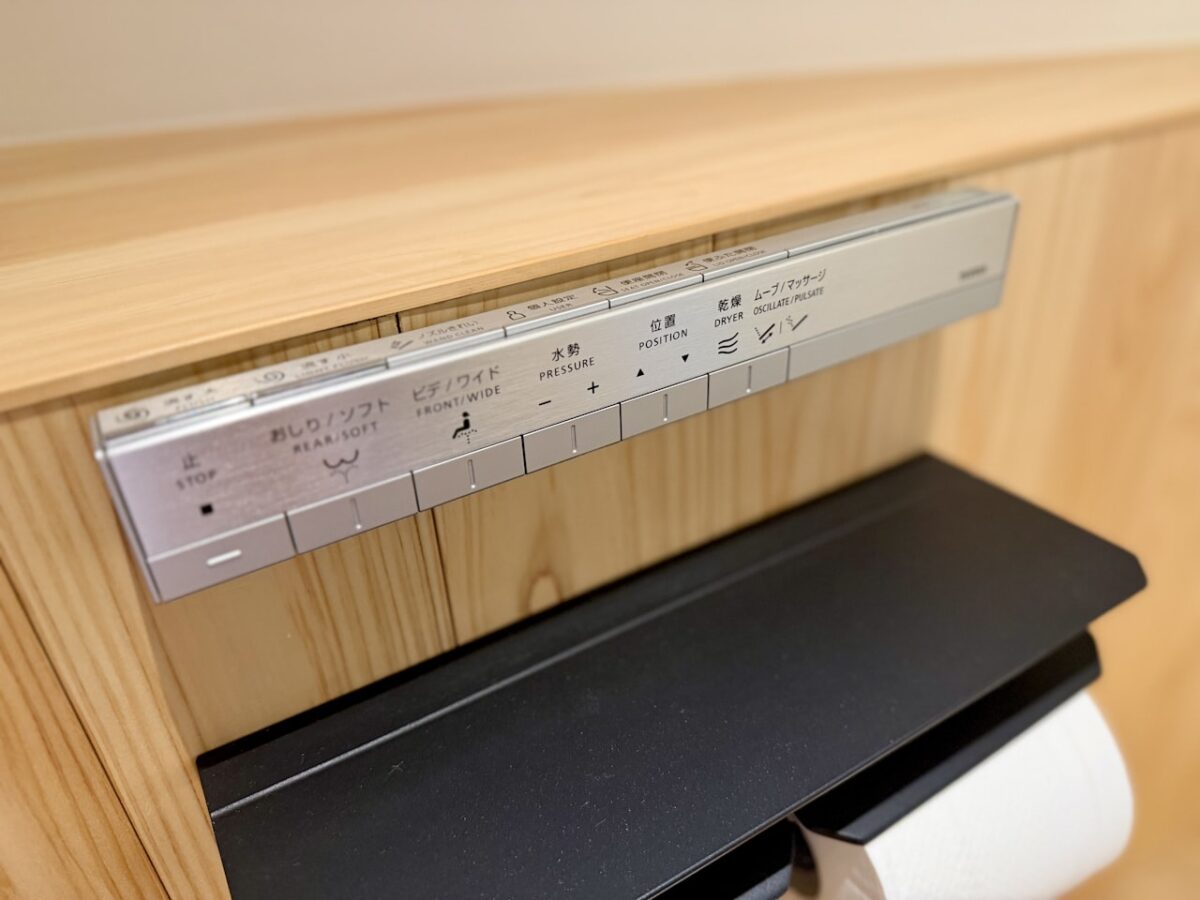
The control panel looks daunting but breaks down into a handful of functions, and most panels now include English labels or clear pictograms. The two you’ll use most are the spray buttons — おしり (oshiri, “rear”) and ビデ (bidet) — which start the warm-water wash, and the all-important 止 (tomeru, “stop”), usually the large button that ends everything. Smaller controls adjust water pressure (強・弱, strong/weak) and position, while a separate 乾燥 (kansō, “dry”) button turns on a warm-air dryer. Flushing is sometimes a button on the panel and sometimes a separate lever or a wave-sensor on the wall marked 流す (nagasu, “flush”). If you’re ever unsure, look for the stop button first — pressing it is always safe and halts any spray instantly.
The “Sound” Button and Water-Saving Flush
Two features often surprise visitors. The first is the 音 (oto, “sound”) button, sometimes shown as a musical note and nicknamed otohime (“sound princess”). It plays a gentle flushing sound to mask any noise — a nod to Japanese sensitivity about privacy in public restrooms — and uses no water at all. The second is the dual flush: many toilets, and the small lever on the tank, offer 大 (dai, “large”) and 小 (shō, “small”) to save water. Choosing the right one is a quiet everyday habit that keeps Japan’s famously efficient facilities running well.
Traditional Squat Toilets
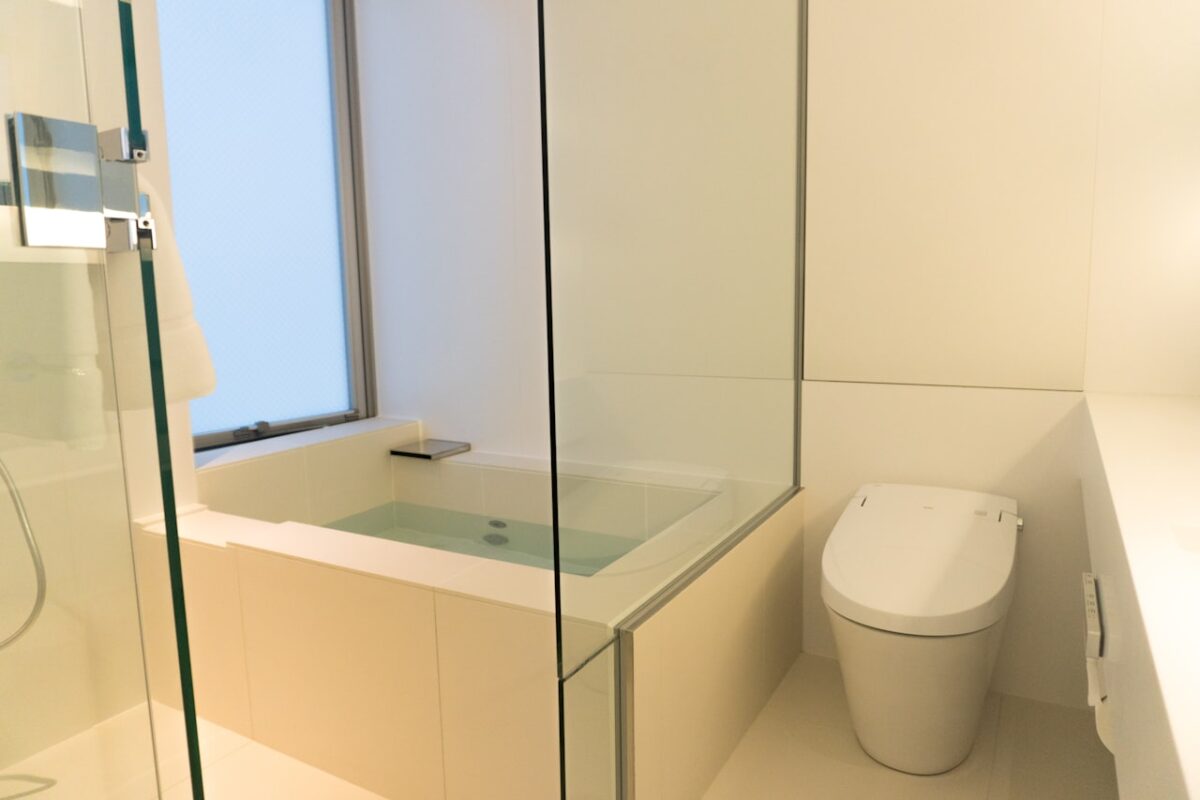
Alongside all this technology you’ll still meet the traditional squat toilet, especially in older train stations, parks, temples and some public buildings. They’re perfectly hygienic — many people prefer them precisely because there’s no contact with the seat — and using one is straightforward once you know the orientation. Face the raised, hooded end of the bowl (toward the flush handle or wall), lower yourself into a squat with feet either side, and flush with the lever or button afterwards. It helps to move anything in your pockets to a bag or coat first. If squatting isn’t comfortable for you, most facilities have at least one Western-style stall too, often marked with a small pictogram on the door.
Finding Clean Public Toilets
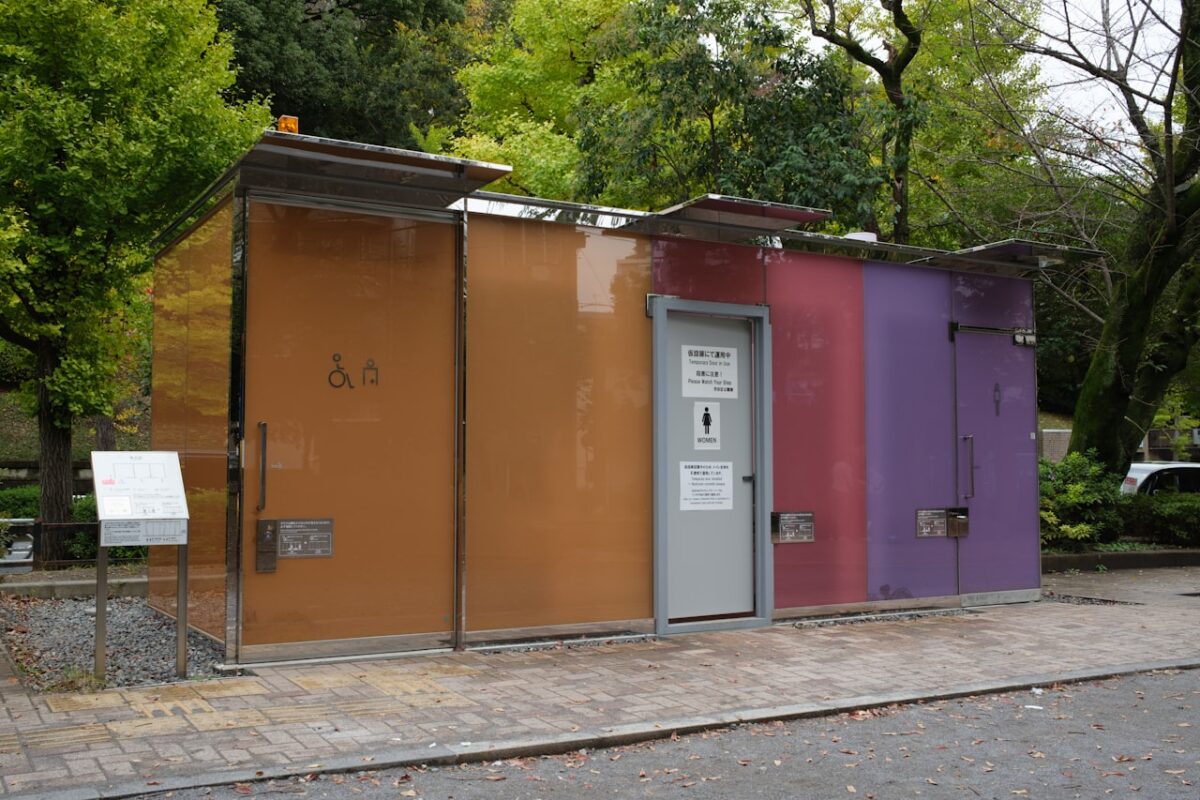
One of the quiet joys of travelling in Japan is that clean, free public toilets are genuinely easy to find. Your most reliable options are convenience stores (konbini), train and subway stations, department stores and shopping centres, and public parks. Department-store toilets are often spotless and beautifully maintained, and station facilities are plentiful. Nearly all are free of charge, so there’s no need to hunt for coins as you might elsewhere. A maps app will show nearby public toilets, and in a pinch a konbini is never far away. Because you’re rarely more than a few minutes from a facility, “where’s the nearest loo?” simply isn’t the worry it can be on other trips.
Toilet Etiquette and Practical Tips
A few small habits will keep you comfortable and courteous. First, carry a small pack of tissues and a hand towel: some older or busy public toilets run low on paper, and many have no paper towels or hand dryer at all — locals routinely carry their own handkerchief. Second, watch for toilet slippers: in homes, traditional inns (ryokan) and some restaurants, you swap your indoor slippers for dedicated toilet slippers at the door, and it’s polite to remember to swap back. Third, only flush toilet paper — wet wipes and sanitary items go in the bins provided. Queue neatly for a single line where stalls are shared, and you’ll fit right in. If you’d like a wider primer on being a considerate visitor, our guide to Japan’s rubbish and recycling rules pairs well with this one.
Accessible and Multipurpose Toilets
Japan is well equipped for travellers with different needs. Larger stations, shopping centres and public buildings usually have a multipurpose toilet (多目的トイレ) — a spacious, private room with a Western-style toilet, grab rails and step-free access. These rooms frequently include a fold-down baby changing table and a baby seat, and many have an ostomate station for travellers with a stoma. They’re a reassuring option for families, wheelchair users and anyone who simply needs a little more space, and they’re clearly signposted with a set of pictograms on the door.
Useful Japanese Words
- お手洗い・トイレ — toilet
- 男 / 女 — men’s / women’s
- 大 / 小 — large / small flush
- 流す — flush
- 止 — stop
- おしり / ビデ — rear wash / bidet
- 音 — sound (privacy noise)
- 使用中 / 空 — occupied / vacant
Toilets on the Shinkansen and Local Trains
You’re never far from a toilet when travelling by rail. Every bullet train (shinkansen) has clean, well-kept toilets between carriages — usually a mix of Western-style washlets and a roomy multipurpose room, plus a small basin area — so long journeys are comfortable. Most limited-express and longer local services have toilets too, though very short commuter lines may not; if in doubt, use the facilities at the station before you board. Station toilets are located inside the ticket gates as well as outside, so you can go before, during or after your journey without a second thought. As always, a small pack of tissues in your bag is a sensible companion.
Public Toilets on Hikes and in Rural Areas
Away from the cities the picture changes a little, and it pays to plan ahead. Toilets at trailheads, mountain huts, rural temples and small parks are often simpler — sometimes a traditional squat toilet, occasionally with no running water — and they may not stock paper. Carry your own tissues and a small hand sanitiser, and note that some mountain toilets ask for a small maintenance donation or request that you take your rubbish away with you. None of this is difficult; it simply rewards a moment’s preparation. Use the clean, generous facilities in the last town or station before you head into quieter country.
Travelling with Children and Older Family Members
Japan is an easy place to travel with family. The multipurpose toilets found in stations, department stores and shopping centres typically include a fold-down changing table and a small child seat, so caring for a baby on the go is straightforward. Nursing rooms (授乳室) are common in larger stores and family attractions. For older relatives or anyone who prefers not to squat, the widespread Western-style washlets and step-free multipurpose rooms make daily outings comfortable and dignified. Knowing these facilities are the norm rather than the exception takes a lot of the logistical worry out of a family trip.
Do You Need to Pay or Bring Anything?
In short, no — and that’s part of what makes Japan so easy. Public toilets are free almost everywhere, so you won’t need coins for entry as you might in parts of Europe. The only things worth carrying are a small pack of pocket tissues and a handkerchief or hand towel, since paper and hand dryers can’t be guaranteed in every facility. Everything else — heated seats, washlets, spotless department-store restrooms, step-free multipurpose rooms — is simply there for you to use. Once you’ve stopped worrying about finding a toilet, you’re free to enjoy the trip.
Toilets in Homes and Traditional Inns
Bathrooms in Japanese homes and ryokan follow a few customs worth knowing. The toilet is usually in its own small room, separate from the bathing area, and you’ll swap into dedicated toilet slippers at its door — then change back out of them as you leave, a step visitors often forget. In a ryokan, the shared or in-room toilet will typically be a modern washlet, so you’ll feel right at home once you know the buttons. Keep your movements quiet and tidy, as you would anywhere, and you’ll fit in perfectly.
Handy Habits for Travellers
A little preparation makes public toilets stress-free. Carry a small pack of tissues, since not every toilet provides paper, and a handkerchief or small towel, because hand dryers and paper towels aren’t guaranteed. Learn to spot a few key characters — 洗浄 (wash), 止 (stop), and 大 / 小 (large / small flush) — and you’ll never be caught out by an unfamiliar panel. When you’re out and about, a maps app will help you find the nearest public toilet quickly, and remember that using a convenience-store toilet is easier if you buy a small item as a courtesy.
Common Questions
Is there always a Western-style toilet? In modern buildings, stations, and hotels, almost always — and larger facilities usually offer both styles, so look for the 洋式 (Western) sign if you’d prefer one. What if the flush isn’t obvious? It may be a button on the panel, a lever, a wall plate, or a touchless sensor; glance around and you’ll spot it. Are public toilets free? Yes, almost always, and they’re generally clean and well maintained — one of the quiet pleasures of travelling in Japan.
Conclusion
Japanese toilets are a small but memorable part of any trip — high-tech, spotless and surprisingly easy once you know what the buttons do. Remember the stop button, carry a little tissue and a hand towel, watch for toilet slippers, and you’ll handle everything from a futuristic washlet to a traditional squat toilet with ease. Like much of Japan, the details reward a moment’s preparation, and the result is a trip with one less thing to think about.
Planning a smooth first visit and want the practical details handled for you? Our native Japanese team can map out your trip through Travel Planning, and if you’d like to pick up a few handy phrases before you go, Travel Japanese is a friendly place to start.
About Iroha Passport
Iroha Passport is a London-based Japanese language and travel service with over six years of experience. Our native Japanese team offers honest, practical guidance alongside Travel Planning and Travel Japanese. By Iroha Passport.