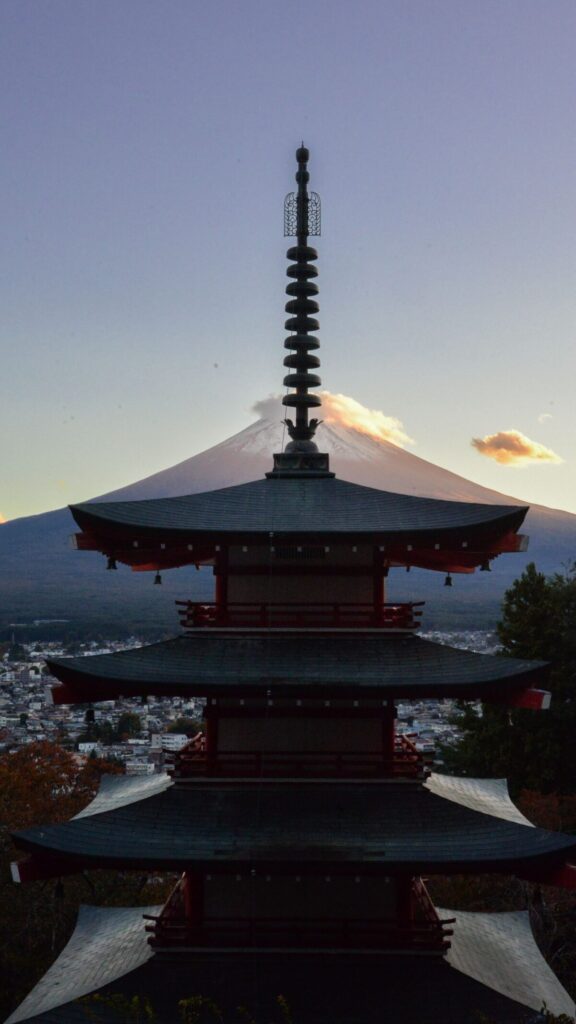
By Iroha Passport — Japanese lessons & Japan travel planning, London
It’s the first question almost everyone asks us, and it’s the right one to start with: how many days in Japan do you actually need? There’s no single number, because Japan rewards both a focused five-day city break and a slow month of trains and small towns. What matters is matching your trip length to what you want to see, and then building a route that doesn’t leave you exhausted.
At Iroha Passport we plan Japan trips for UK travellers, and our native Japanese planners grew up on these train lines, have done the day trips and the long hauls, and have watched a lot of first-time visitors either fall in love with the place or spend two weeks quietly running themselves into the ground. So this guide is less about a magic number and more about the trade-offs, with a suggested route for each trip length and a straight answer about who it suits.
If you’d rather skip the reading and get a personalised suggestion, there’s a free travel-style quiz on the site that recommends a route based on how you like to travel (fast and packed, or slow and deep). More on that near the end.
The short answer: how long is a Japan trip, really?
For a first visit from the UK, most people land somewhere between 10 and 14 days, and that’s for a good reason. You’re already committing a long-haul flight and a full day of jet lag on each side, so a trip much shorter than a week can feel like you’ve barely arrived before you’re packing again. That said, plenty of people do brilliant five- to seven-day trips, especially if it’s a second visit or a stopover.
Don’t think in terms of “how many cities can I fit in.” Think in terms of “how many bases do I want, and how much do I want to see around each one.” Every time you change cities, you lose a half-day to packing, checking out, hauling luggage to a station, and settling into a new place. Two well-chosen bases with day trips almost always beats five rushed one-night stops.
As a rough rule, budget one to two nights per base minimum, and don’t plan more than one city change every two to three days. Everything below follows that logic.
5 to 7 days: one region, done properly
A week or less is a real trip, not a consolation prize. But it is not enough to “see Japan,” and trying to cram Tokyo, Kyoto, Osaka and Hiroshima into six days is the single most common mistake we see. You’ll spend more time on trains than in temples.
With five to seven days you have two strong options.
Option A: Tokyo + day trips
Base yourself in Tokyo the whole time and never touch a suitcase after day one.
- Days 1–3: Tokyo. Different neighbourhoods each day (Asakusa and the old east side, Shibuya and Shinjuku, Harajuku, a slower day around Yanaka).
- Day 4: Hakone or Nikko as a day trip. Hakone for hot springs and Mt Fuji views; Nikko for shrines and forest.
- Day 5: Kamakura, an easy hour out for temples and the coast, or a second Tokyo day for the things you missed.
This suits first-timers who want depth over breadth, anyone nervous about logistics, and people who like the idea of “one home base” so they can properly unpack.
Option B: Tokyo to Kyoto
If you want the two iconic sides of Japan (modern capital, historic capital) in one week:
- Days 1–3: Tokyo.
- Day 4: travel to Kyoto (the bullet train takes about 2 hours 15 minutes on the fastest Nozomi, or around 2h40 on the pass-friendly Hikari, and it’s worth doing in daylight for the Mt Fuji view on the right-hand side, roughly 40–50 minutes after leaving Tokyo).
- Days 5–7: Kyoto, with an easy half-day into Nara for the deer and the great bronze Buddha.
This suits people who’d feel they’d missed out without seeing Kyoto’s temples and machiya streets. With only seven days, though, resist the urge to also “pop to Osaka.” It’s close, but each add-on nibbles a day you don’t have.
For a week, a single-region trip almost always feels richer than a country tour. You come home with a place, not a blur.
10 days: the Golden Route
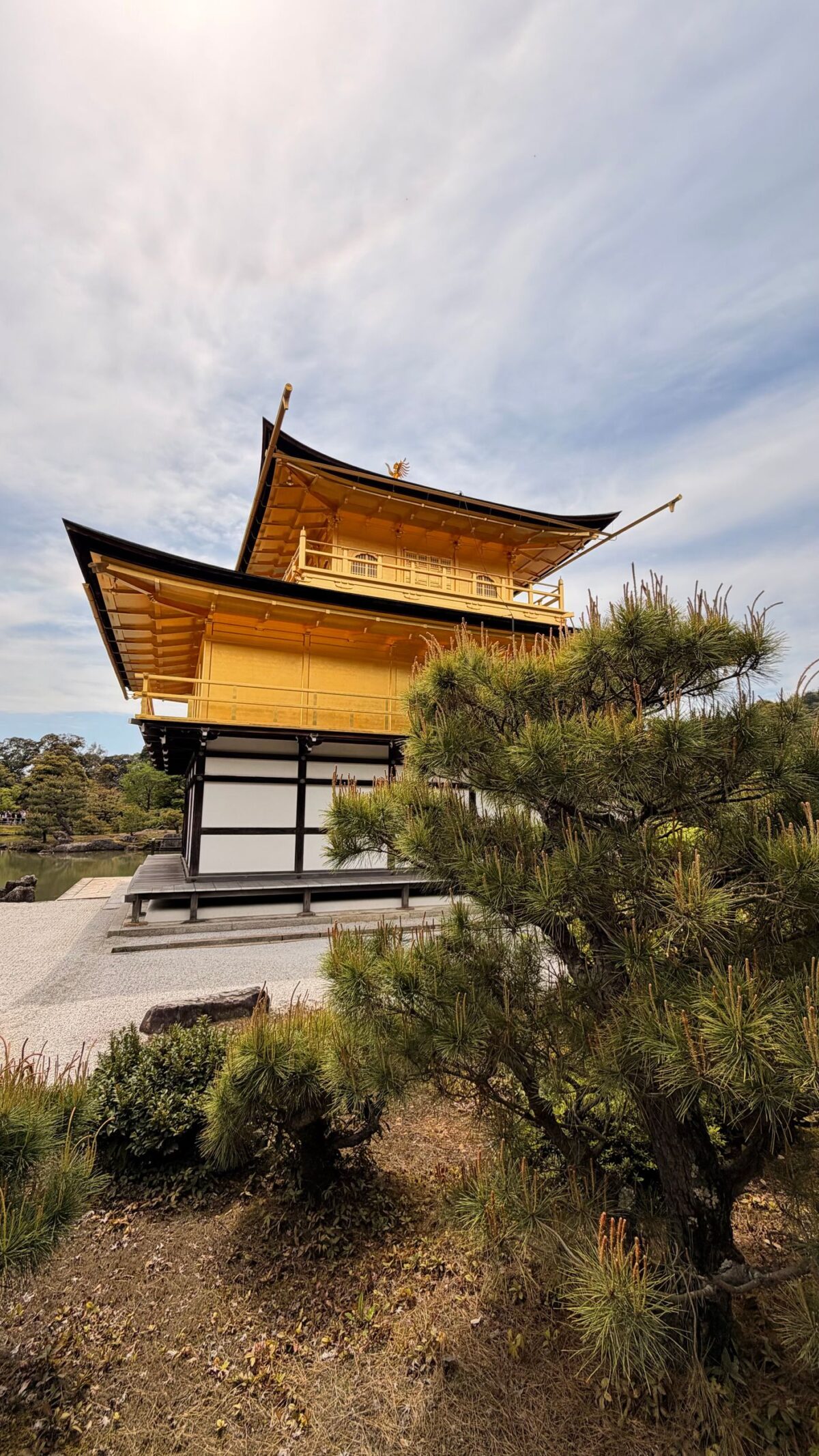
Ten days is, realistically, the sweet spot for a first Japan trip. It’s long enough to see genuine variety and short enough that you’re not managing fatigue. This is where the classic Golden Route earns its name: Tokyo, Hakone, Kyoto, Osaka.
- Days 1–3: Tokyo. Neighbourhoods, food, maybe one big day trip if you’re energetic.
- Day 4: Hakone. One night in a ryokan with an onsen is, for a lot of people, the highlight of the whole trip. Do it here, on the way west.
- Days 5–7: Kyoto. Three nights lets you slow down: early-morning temple visits before the crowds, a day in Nara, an evening in the Gion lanes.
- Days 8–9: Osaka. Louder, funnier, food-obsessed. A great contrast after Kyoto’s calm, and a good base for a day trip to Himeji castle or Kobe if you want one.
- Day 10: return. Fly home from Osaka (Kansai) or loop back, since flying out of a different airport than you flew into saves a backtrack, so it’s worth checking open-jaw flights from the UK.
This route suits the classic first-timer who wants “the highlights” without feeling rushed, couples, and anyone who wants a bit of everything: neon, temples, hot springs, and world-class eating. Ten days is also the point where a rail pass starts to make sense for some itineraries, though with the recent price changes it no longer automatically pays off. As of 2026 the 7-day pass is ¥50,000 (around £260), so a simple Tokyo–Kyoto–Osaka loop is usually cheaper on individual tickets; the pass rewards longer, faster-moving routes. Worth doing the maths on your specific route, and remember it doesn’t cover the fastest Nozomi trains without a surcharge.
2 weeks: the Golden Route, plus one deeper layer
Fourteen days is where Japan really opens up. You keep the Golden Route as your spine and add one meaningful extension rather than five small ones. Pick the extension that matches you.
Add Hiroshima and Miyajima
The most popular two-week add-on, and deservedly so. After Kyoto/Osaka, continue west.
- Day 11: travel to Hiroshima and see the Peace Memorial Park and Museum, which is sobering, essential and beautifully done.
- Day 12: Miyajima island for the floating torii gate and the tame deer. One of the most photographed views in Japan, and it earns it.
This suits history-minded travellers and anyone who wants the emotional weight that Hiroshima brings to a trip. It’s a long day on the train from Kyoto, so give it two nights, not one.
Add Kanazawa and the Japan Alps
If you’d rather go inland and quieter instead of further west:
- Days 11–12: Kanazawa, with one of Japan’s finest gardens (Kenrokuen), an intact samurai district, and superb seafood, all with a fraction of Kyoto’s crowds.
- Day 13: Shirakawa-go or Takayama in the mountains, for thatched farmhouses and an older, slower Japan.
This suits repeat-feeling travellers and anyone who found the big cities a touch much and wants breathing room. It’s a firm favourite among our planners as a two-week variation.
Go north or far south: Hokkaido or Kyushu
With a full two weeks you could instead peel off to a whole other island. Hokkaido (Sapporo, nature, food, and superb powder snow in winter) or Kyushu (volcanoes, the best onsen towns in the country, and a warmer, more laid-back feel). These involve a flight rather than a train, so treat them as a two-region trip: roughly a week around the Golden Route, then a week up north or down south. Don’t try to bolt Hokkaido onto a full Golden Route by rail, because the distances are bigger than the map suggests.
Two weeks is the length we’d steer most first-timers toward if the holiday allowance and budget stretch to it. You get the highlights and one region that feels like your own discovery.

3 weeks or more: go deep, go rural, slow right down
Three weeks and beyond is where you stop touring and start travelling. You have room to add the places that don’t fit a tighter schedule and, just as importantly, room to do nothing for a day without guilt.
A loose three-week frame might be: Golden Route (about 10 days) → Hiroshima and Miyajima (2 days) → then a slow, rural stretch chosen from:
- The Kii Peninsula: the Kumano Kodo pilgrimage trails and the temple lodgings of Koyasan, where you sleep in a monastery and eat vegetarian temple food.
- Shikoku: the least-visited main island, with its own pilgrimage route, whirlpools, and river valleys.
- The San’in coast or Tohoku: the northern and back-coast regions most tourists never reach, where the pace and prices drop and the welcome warms up.
This suits second-time visitors, anyone working remotely part of the trip, and travellers who value one unhurried afternoon in a small town over another checklist landmark. Three weeks also finally gives you permission to build in a rest day; after ten days of temples and trains, everyone needs one, and the people who plan for it are the ones who come home happy.
The pacing mistake almost everyone makes
The most common regret isn’t “I didn’t see enough,” it’s “I saw too much, too fast.” Japan is dense (a single Tokyo neighbourhood can eat a whole day if you let it), and the temptation to squeeze in one more city is strong. Resist it. Build in slower mornings, keep at least one flexible day per week, and remember that jet lag from the UK is real for the first two or three days.
As a rough first-hand yardstick: what’s really worth the time is a night in a ryokan with an onsen, an early start at Kyoto’s big temples before the coaches arrive, and unstructured hours simply walking and eating. What’s usually not worth the time is a long detour for a single “must-see” that photographs better than it visits, or a one-night city stop that costs you a full day in transit and packing.
Not sure which length fits you?
If you’re torn between, say, a packed 10-day highlights run and a slower two weeks, the deciding factor is usually your own travel style rather than the map. Some people are energised by moving; others need to sit in one café for an hour to feel a place. There’s a free travel-style quiz on the site that asks a few quick questions and suggests a route and trip length to match, a nice starting point before you commit to flights.
How Iroha Passport can help you plan the right length
Choosing the number of days is the easy part; turning it into a route that flows (right bases, sensible train days, ryokan booked before they sell out, no accidental backtracking) is where first-hand knowledge makes the difference. That’s what Iroha Passport does.
Because our planners are native Japanese and the service is UK-based, the planning is built from actually knowing these places, priced in pounds, and pitched at real-traveller prices rather than premium-agency rates. The Travel Planning service runs in tiers from £15 to £65, and the tier matches your trip’s length and complexity:
- A short, single-region trip (5–7 days, one or two bases) needs light touch, and the lower tier is usually plenty.
- A 10-day Golden Route sits in the middle: multiple cities, train timing, ryokan, and day-trip choices to get right.
- A two-week or three-week multi-region trip (Hiroshima, Kanazawa, Hokkaido, rural stretches) is where the top tier earns its keep, because the moving parts multiply fast.
Tell us how many days you’ve got and roughly what you’re after, and we’ll tell you honestly which length and route actually fit, and build it so it works on the ground.
Ready to turn “how many days” into a real route? Take a look at the Travel Planning service, with tiers from £15 to £65, matched to your trip length and complexity, built by native Japanese planners who know these routes first-hand. Send us your dates and your wish list, and we’ll shape the rest.
Related reading:
– How to Plan a Trip to Japan from the UK: A Step-by-Step Guide — the full picture, from flights to first day
– Is a Japan Trip Itinerary Service Worth It? (vs Planning It Yourself) — an honest DIY-vs-service comparison
About Iroha Passport
This guide is by Iroha Passport, a London-based Japanese lessons and Japan travel service. We’ve been helping learners and travellers in the UK for over six years (previously known as SakuraJapan), so we’re an established name rather than a brand-new one. Our native Japanese teachers, based in London, teach in fluent English — online and in person — with lessons built around your goal (JLPT, travel, anime or business) and clear, published pricing. Our native Japanese team also plans first-hand Japan itineraries for UK travellers, priced in pounds. Iroha Passport is rated ★4.6 on Google (based on 11 Google reviews).