By Iroha Passport — Japanese lessons & Japan travel planning, London
Planning a trip to Japan from the UK can feel like standing at the bottom of a very tall mountain: the long-haul flight, the time difference, the rail passes everyone argues about online, the seasons that make or break your photos, and a currency that turns your budgeting brain to soup. We get it, and we want to make it simpler.
Iroha Passport is a UK-based Japan travel service built by native Japanese planners. We plan Japan trips for UK travellers, and we’ve spent years watching people either over-plan themselves into a panic or under-plan and miss the things they’d have loved most. This is our step-by-step guide to Japan trip planning from the UK, written the way we’d explain it to a friend over coffee in London, not the way a booking site sells it to you.
By the end, you’ll know the order to make your decisions in, where the UK-specific pitfalls hide, and roughly what to budget in pounds.
Step 1: Decide when to go (the season shapes everything)
Before flights, before budget, before anything, decide roughly when you want to travel. In Japan the season affects far more than the weather; it can mean a completely different trip.
- Spring (late March to April) is cherry blossom season: genuinely magical and genuinely crowded, with flight and hotel prices to match. The bloom moves week to week and city to city, so timing it is part luck.
- Autumn (November) is a quiet favourite of ours: cool, clear, maple colours every bit as beautiful as the blossoms, and calmer crowds.
- Summer (June to August) is hot and humid in a way that surprises British visitors, and June brings the rainy season. It’s also festival season if you can handle the heat.
- Winter (December to February) is underrated: crisp weather, fewer tourists, lower prices, snow in the north, and hot springs that feel earned.
Two dates to actively avoid unless you have no choice: Golden Week (late April to early May) and Obon (mid-August). These are Japanese domestic holidays when the whole country travels at once, prices spike, and trains and hotels sell out. As Japanese natives, we promise you don’t want your first trip to collide with them.
A note on the time difference
Japan is nine hours ahead of the UK in winter and eight hours ahead during British Summer Time. Flying east knocks people harder, so build a gentle first day into your plan rather than scheduling a big sightseeing push straight off the plane.
Step 2: Decide how long to stay
Distance is the reason this matters more from the UK. You’ve spent a long-haul flight and a good chunk of money to get there, so a rushed four-day trip rarely feels worth it. As a rough guide, we’d suggest 10 to 14 days for a first visit that covers the classics without sprinting. A week is absolutely doable, you’ll just want to be more selective about your route. (We’ve written a dedicated guide on exactly how many days you need for different trip styles, linked at the end.)
Whatever you choose, be realistic about jet lag and travel days. A “14-day trip” with the flights counted is really more like 12 days on the ground.
Step 3: Set your budget (in pounds, realistically)
This is where UK travellers most often go wrong, because so much Japan advice is written in US dollars or yen and assumes American flight prices. Let us reframe it in pounds.
Your Japan budget breaks into roughly six buckets:
- Flights from the UK: usually your single biggest line item.
- Accommodation: hugely variable depending on style (see Step 6).
- Rail and local transport: this is where the JR Pass decision lives (Step 5).
- Food: genuinely can be cheap and excellent, or a splurge, your choice.
- Attractions, activities, and experiences.
- Shopping and the “just one more thing” fund: be honest with yourself here.
To give you some pounds to anchor on (and please treat these as rough guides, because they move with the season and the exchange rate), return flights from the UK typically run around £600–£800 outside peak periods and £1,000–£1,200+ in high season; a comfortable mid-range hotel is roughly £60–£110 per night; and daily food can be as little as £15–£25 if you lean on konbini and casual spots, or £40–£60+ if you eat out well. Rather than guess, use our free budget simulator: plug in your trip length, travel style, and season and get a realistic total in pounds. It lives on the site (referenced at the end), and it’s a far better use of your time than guessing. Run it before you commit to dates, because season alone can move your total by a surprising amount.
Japan Trip Budget Simulator
A quick estimate for a trip from the UK, built by native Japanese planners. Adjust the options for a ballpark cost.
Estimated total for your trip
—
—
These figures are a rough guide only; actual costs move with timing, such as peak seasons and weekends.
These are rough guide figures only (flights + accommodation + food + local transport + activities), shown as a range. Actual costs vary with season, exchange rate, and booking timing. Excludes travel insurance, shopping and souvenirs.
Want a real plan for this budget?
Iroha Passport’s native Japanese planners, based in the UK, will turn this ballpark into a real, first-hand itinerary (routes, stays and hidden spots), priced in pounds.
Get a native-built plan → Travel Planning from £15Step 4: Book your flights from the UK
Direct flights run from London (Heathrow) to Tokyo (Haneda and Narita) and are the fastest and least tiring option at around eleven to twelve hours. Connecting flights via the Middle East, mainland Europe, or East Asia are often cheaper but add hours and a layover.
A few UK-specific tips:
- Fly into one city and out of another where you can (for example, into Tokyo and out of Osaka/Kansai). This “open-jaw” routing saves you doubling back and often costs little more. It also shapes your whole itinerary, so decide it early.
- Book roughly a few months ahead for the best balance of price and availability, and much earlier if you’re travelling in cherry blossom season.
- Haneda is closer to central Tokyo than Narita, which matters more than people realise when you land jet-lagged.
- Watch the outbound date versus your body clock: an evening departure from the UK often means you arrive in Japan in the afternoon, which is kinder for adjusting.
Flight prices are the most time-sensitive figure in this whole article. As a rough guide, return economy fares from London tend to sit around £600–£800 in quieter months (November is often the cheapest), climbing to £1,100–£1,200+ in July, August and over cherry blossom season, so your travel dates alone can nearly double this single line item.
Step 5: Sort out rail (JR Pass and the alternatives)
The Japan Rail Pass is the topic that generates the most confused questions we receive. The rules and pricing have changed, and a lot of the advice online is now out of date.
Here’s the current-as-of-writing picture, with the caveat that this really does change:
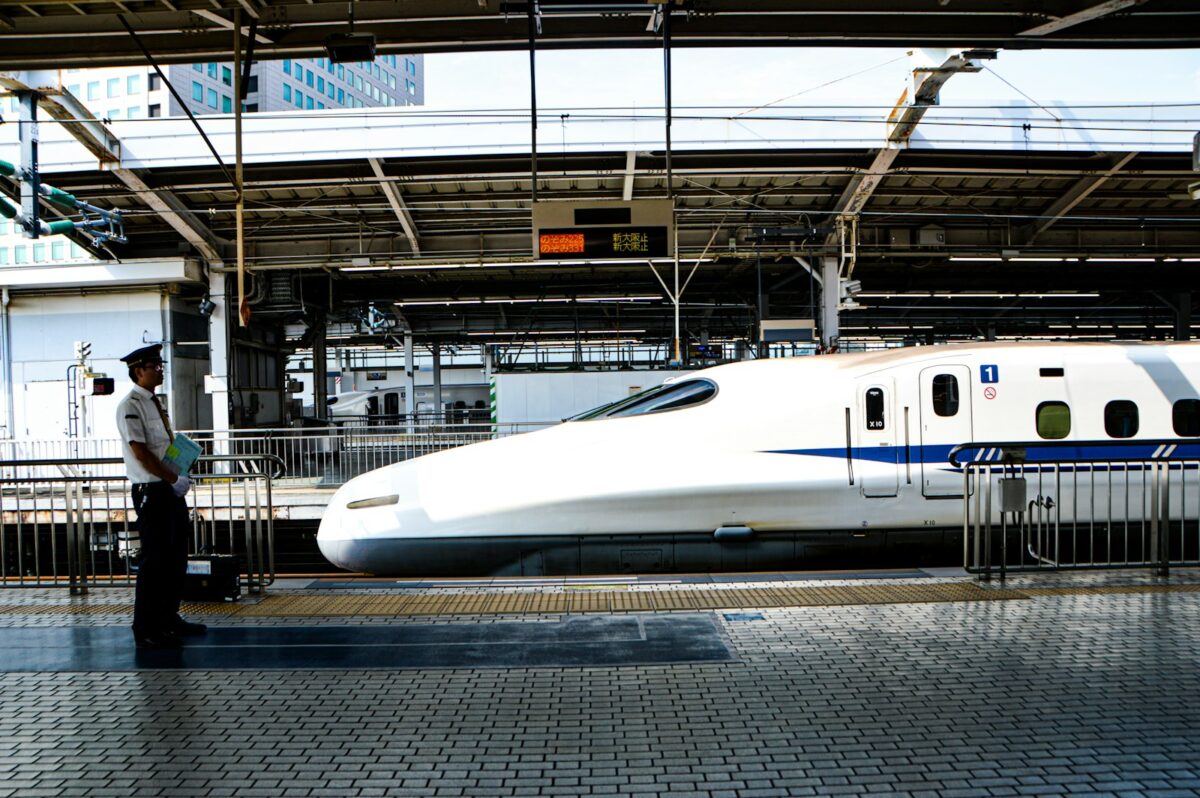
- The JR Pass is a fixed-price pass for tourists that covers most Japan Railways trains, including many bullet trains (shinkansen), for a set number of consecutive days.
- After a significant price rise, the pass no longer automatically pays for itself the way it once did. Whether it’s worth it now depends entirely on how much long-distance travelling you’re doing. A Tokyo–Kyoto–Tokyo trip may not justify it; a wider loop might.
- For many first-timers doing a compact route, buying individual shinkansen tickets (or using regional passes for a specific area) now works out better.
Here are the current figures to work from. As of 2026, the nationwide JR Pass (bought through the official JR Pass website) costs ¥50,000 for 7 days, ¥80,000 for 14 days and ¥100,000 for 21 days in ordinary class (roughly £260 / £415 / £525 at mid-2026 exchange rates), with Green Car versions higher. From 1 October 2026, passes bought through travel agencies rise a little, while the official website price stays the same. Two things worth knowing: the pass does not cover the fastest Nozomi and Mizuho bullet trains without an extra fee (you take the slightly slower Hikari instead), and after the big 2023 price rise it now only pays off for long, fast-moving routes. Think Tokyo–Kyoto–Hiroshima–Kanazawa–Tokyo inside a week. For a gentle Tokyo–Kyoto–Osaka loop, buying individual tickets usually works out cheaper. So decide your route first, then do the rail maths, never the other way around. This is the kind of decision where a plan built around your specific stops saves real money.
Getting around within cities
Inside Tokyo, Kyoto, and Osaka you’ll mostly use metros and local trains, not the shinkansen. Grab a rechargeable IC card (Suica or Pasmo) and tap in and out, with no fumbling for tickets. You can add a Suica to an iPhone’s Apple Wallet (any iPhone 8 or newer works, wherever you bought it). Mastercard and Amex usually top up fine, but UK Visa cards are often rejected when you top up in Apple Wallet, a UK-specific quirk worth knowing. If that happens, simply add cash at any convenience store or station machine. Android phones bought outside Japan generally can’t add a Suica at all, so Android users are better off with a physical IC card, or the Welcome Suica Mobile app (iOS, built for visitors and accepts foreign cards).
Step 6: Choose your accommodation types
Japan’s accommodation is more varied than most UK travellers expect, and mixing types makes the trip richer:
- Business hotels: compact, spotless, reliable, and great value. Your bread-and-butter.
- Ryokan: traditional inns, often with tatami rooms, futon bedding, and beautiful multi-course dinners. Worth doing at least one night, ideally near a hot spring.
- Hostels and guesthouses: excellent quality in Japan and brilliant for solo travellers and budgets.
- Capsule hotels: fun for a night and a story to tell.
- Apartment rentals: handy for families or longer stays.
Book the popular ryokan and anything in peak season early, because the best ones fill months out.
Step 7: Handle connectivity and money
Staying connected
You’ll want data from the moment you land, for maps, translation, and train times. Your options:
- eSIM: our usual recommendation. Buy it before you fly from the UK, install it, and it activates on arrival. Cheap and no faff.
- Pocket wifi: a small rented device that connects several gadgets at once; good for families or groups.
- Physical SIM: still available, but eSIM has largely made it unnecessary if your phone supports it.
Money
Japan is more cash-friendly than the UK, though card acceptance has improved a lot. Practical tips:
- Bring a travel-friendly debit or credit card (the fee-free UK fintech cards are ideal) and always choose to be charged in yen, not pounds, at the terminal to dodge poor conversion rates.
- Carry some cash for small restaurants, shrines, and rural spots.
- Convenience store ATMs (7-Eleven and the like) reliably accept foreign cards.
Step 8: Design your route
Now the fun part. For a first trip, the Golden Route (Tokyo, Hakone/Mount Fuji, Kyoto, and Osaka) exists for good reason. It strings together the icons with efficient shinkansen links and suits 7 to 14 days beautifully.
If you have more time or a repeat visit, branch out: Hiroshima and Miyajima, Kanazawa, the Japan Alps, Hokkaido in winter, or Okinawa for beaches. The mistake we see most is cramming too many cities in and spending your holiday on trains. Fewer places with more depth is the local’s way to travel.
Step 9: Lock in the bookings that sell out
Some things you can leave loose. Others will sell out weeks ahead and disappoint you if you wait. Prioritise booking:
- Popular ryokan and peak-season hotels.
- The teamLab digital art museums in Tokyo.
- The Ghibli Museum (Mitaka) and Ghibli Park, which sell out fast. For the museum, overseas visitors can book roughly three months ahead through JTB, or via Lawson from 10:00 Japan time on the 10th of each month for the following month. Set a calendar reminder, because popular dates go quickly.
- Sumo tournaments, seasonal and city-specific.
- A handful of famous restaurants and any tea ceremony or hands-on experiences.
Everything else, from day-to-day meals to most temples and shopping, you can happily play by ear.
A realistic planning timeline
To pull it all together, here’s the order and rough timing we’d actually work to:
- 4 to 6 months before: Fix your dates and season, set your budget in pounds, and book flights. Start thinking route.
- 2 to 3 months before: Finalise the route, book accommodation (ryokan and peak-season stays first), and book the sell-out attractions above.
- 1 month before: Sort your rail plan and any regional passes, buy your eSIM, sort your travel card, and check your passport is valid for your whole trip. British Citizens don’t need a visa for short tourism and are given up to 90 days on arrival (see the Embassy of Japan in the UK). It’s worth carrying proof of onward travel and funds in case immigration asks.
- 1 to 2 weeks before: Set up mobile Suica, download offline maps and a translation app, note your time-difference adjustment, and pack.
Adjust for how early you’re booking, but that sequence keeps you from making decisions in the wrong order, which is the single most expensive planning mistake.
Where a bit of local help changes things
Here’s the important bit. You can absolutely plan this yourself, and if you enjoy the research, you should. But the gap Iroha Passport built its Travel Planning service to fill is a real one. The big agencies charge premium prices for a premium hand-hold. The free auto-planners spit out mechanical, one-size-fits-all routes. And the mid-tier “specialists”? They’re almost all Westerners handing you the same information you could find yourself.
Our Travel Planning is built by native Japanese planners, based here in the UK, pricing in pounds, and drawing on first-hand knowledge of the places we’re sending you to, not a template. Our itineraries start at just £15. For the price of a couple of London coffees you get a route built around your actual dates, budget, and interests, by people who grew up navigating these trains and neighbourhoods. And because Iroha Passport also offers Japanese lessons with native teachers, we can weave in a little language prep if you’d like.
Plan it yourself with this guide, or let us take the weight off. Either way, we’d love for your Japan trip to be the one you talk about for years.
Ready to start planning?
Travel Planning by native Japanese planners, from £15. Skip the mechanical auto-planners and the pricey agencies. Get a Japan itinerary built around your dates, your budget, and your interests, in pounds, by people who are actually from there. See the Travel Planning service →
Try the free budget simulator first to estimate your trip cost in pounds before you commit to dates.
Keep reading
- Is a Japan Trip Itinerary Service Worth It? (vs Planning It Yourself) — an honest look at DIY versus outsourcing.
- First-Time Japan Trip: What to Know Before You Go (+ Checklist) — the pre-departure essentials.
- How Many Days Do You Need in Japan? (+ Suggested Routes) — pick the right trip length.
About Iroha Passport
This guide is by Iroha Passport, a London-based Japanese lessons and Japan travel service. We’ve been helping learners and travellers in the UK for over six years (previously known as SakuraJapan), so we’re an established name rather than a brand-new one. Our native Japanese teachers, based in London, teach in fluent English, online and in person, with lessons built around your goal (JLPT, travel, anime or business) and clear, published pricing. Our native Japanese team also plans first-hand Japan itineraries for UK travellers, priced in pounds. Iroha Passport is rated ★4.6 on Google (based on 11 Google reviews).